

District Spotlight: Longevity, Community Form the Foundation of Lost Hills
Tuesday January 6, 2026

Of all the words to describe the Lost Hills Union School District in the rural lands of northwest Kern County, the best would be ‘longevity.’ From the teachers and staff members who started as students themselves and went on to spend decades serving the district — to the school site that survived wild fluctuations in student enrollment — the district has stood the test of time.
At the turn of the 20th century, prospectors searching for “black gold” settled in the scrub lands of western Kern County, which would eventually be named Lost Hills. In 1909, the first successful oil well was drilled in the area, leading to an oil boom. Businesses soon followed, and a small town quickly rose from the hills, bringing education to the families who moved in.
The Lost Hills School District was first organized on February 9, 1912. The schoolhouse had not yet been built, and classes were held in a local garage. The district’s first teacher, Martha Nelson, taught an average of nine students. Just a year later, the community approved a $10,000 bond to build a proper school. When the new schoolhouse opened in December 1913, the community celebrated with a rodeo, Wild West show, barbecue, and dance — an early sign that Lost Hills viewed its school as the heart of the town.
“The school really is the hub of the community,” said Lost Hills Superintendent Harrison Favereaux. “The families could always come here.”
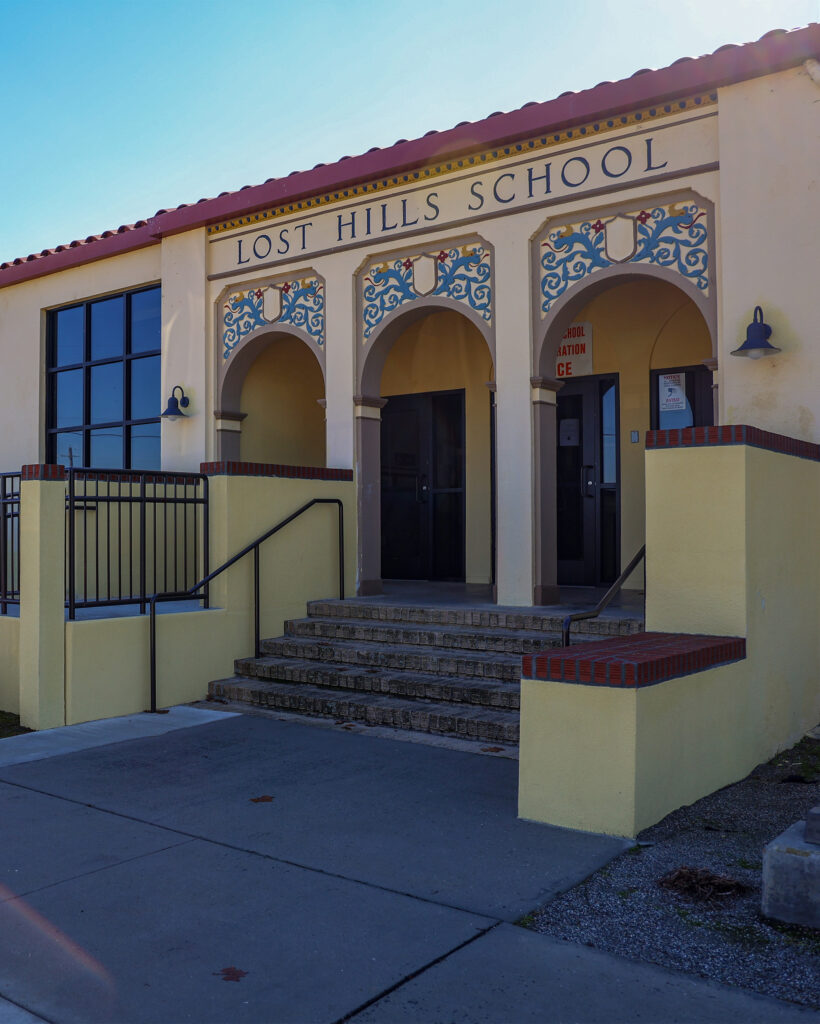
Lost Hills population rose and fell around oil. By 1917, the district operated three small schools scattered across the region. Eventually, Lost Hills joined the Annette School District in 1952, forming the Lost Hills Union School District, which still exists today. At the time, enrollment stood at just 110 students.
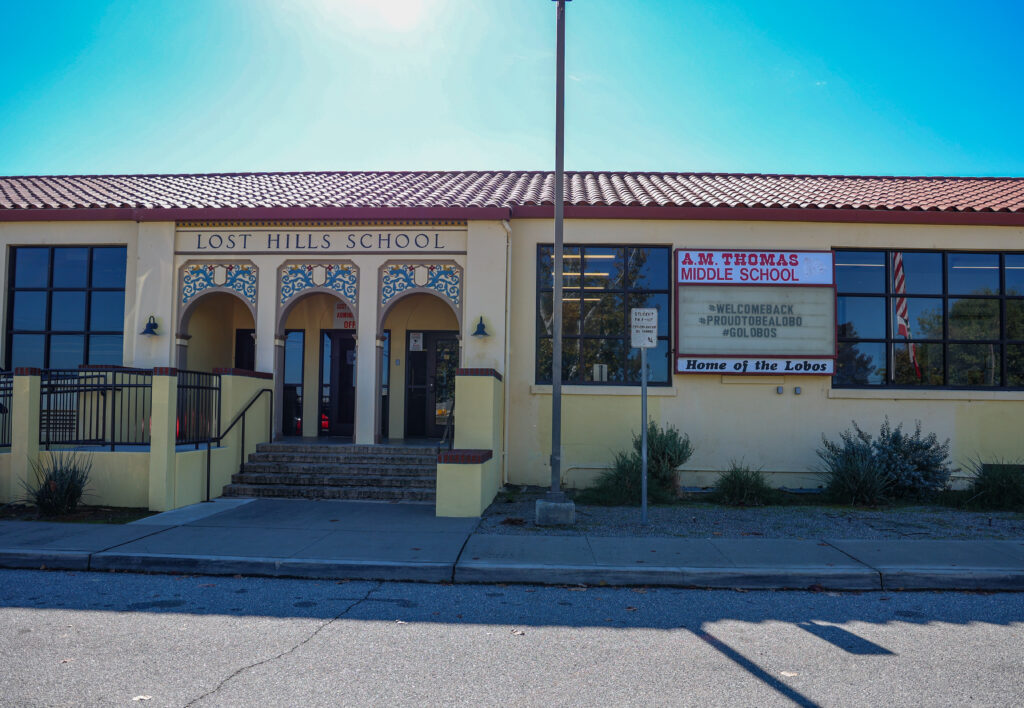
The completion of Interstate 5 and, later, the California Aqueduct in the 1960s and 70s opened the region to large-scale agriculture. Farmworker families moved in, and enrollment surged. Enrollment tapered off once again with the opening of a charter school campus in the area. Today, Lost Hills Union School District consists of Lost Hills Elementary and A.M. Thomas Middle Schools, both located on the same campus and serving just under 300 students.
While small in size, the district has become a model for how rural schools can thrive through its commitment to students and families. The district serves as a lead agency for the Small Schools Consortium, a group of schools and districts with limited enrollment that work together to share much-needed resources and programs for students, such as social workers and early childhood services. Lost Hills oversees these programs and seeks grant funding to keep them going. Assistant Superintendent Fidelina Saso says finding the necessary funds is a constant challenge, but it’s worth it.
“If we didn’t have this funding, we wouldn’t be able to hire a full-time counselor or social worker,” Saso said. “Our kids deserve the same access to resources as kids in larger districts. We just have to be more creative.”
Consistency is one thing that sets Lost Hills apart from other districts. Favereaux has worked in the district for more than 25 years and has served as superintendent for 17 of those. Both Saso and Principal Veronica Sanchez-Gregory have dedicated roughly a quarter-century to the district. In fact, Sanchez-Gregory and Saso have known each other since third grade, when they attended Lost Hills schools together.
“I was a student here, and now I’ve come back,” Sanchez-Gregory said. “This is home.”
Saso says the majority of the district’s staff have been there a long time. As new teachers are brought on, they want to stay.
“They’re here for a really long time, and most of them bring their kids to our school,” she explained. “We take a lot of pride in that, because they’re seeing the benefit and they want their kids to be here.”
That shared history translates into shared values. The three administrators speak less about hierarchy and more about teamwork, reflection, and collective responsibility.
“We’re always asking, ‘How can we be better for our students?'” Sanchez-Gregory said. “Most districts don’t bring in third-party consultants to give administrators feedback — but we do. We want to grow.”
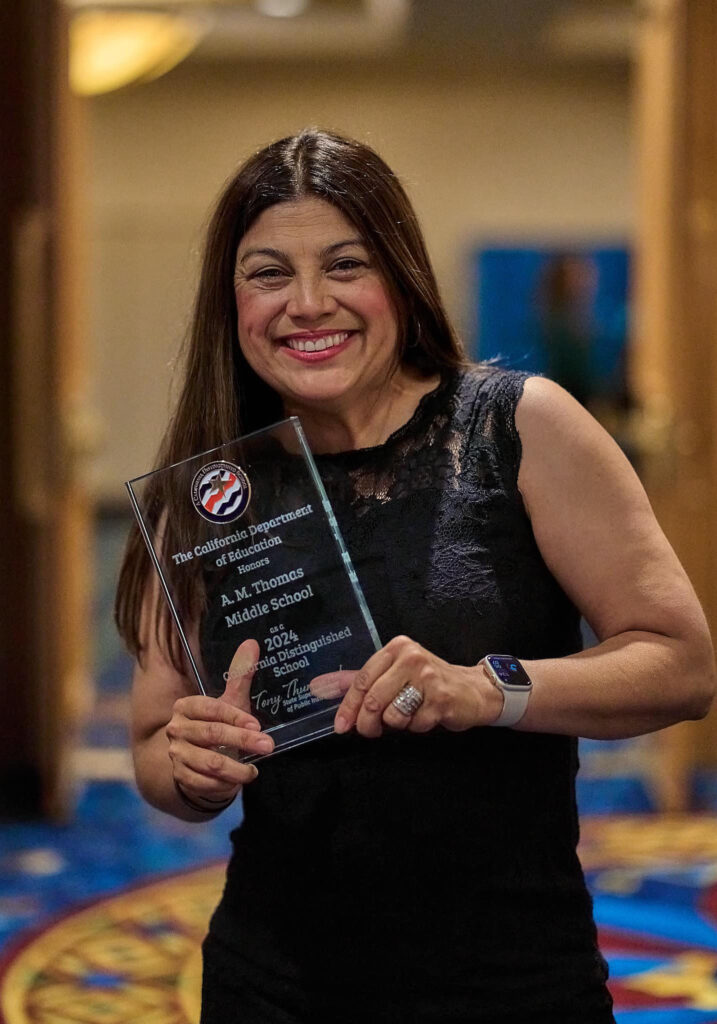
Principal Veronica Sanchez-Gregory poses with a plaque honoring A.M. Thomas Middle School with a California Distinguished Schools Award in 2024.
That growth mindset was tested during the COVID-19 pandemic. Lost Hills faced challenges many rural districts know well: limited internet access, families with one vehicle, and long distances to services. When schools closed statewide, the district moved quickly to solve problems rather than wait for them to compound.
“There’s hardly any internet out here,” Favereaux said. “So we had to run around and get wireless service with microwave towers to feed to the families who couldn’t come to school.”
Those efforts didn’t just support distance learning; they permanently improved connectivity for many households. Through partnerships, families were able to keep affordable internet even after emergency contracts ended, creating lasting benefits beyond school.
Perhaps most notably, Lost Hills reopened its campus earlier than most districts, welcoming students back by October 2020.
“We needed to get back open for our students,” Sanchez-Gregory said. “We did what was right for kids, for their mental health, and making sure that we were there for them.”
The decision paid off. While many schools struggled with learning loss, Lost Hills saw some of its strongest academic growth in the years immediately following the pandemic.
Lost Hills’ success didn’t happen by accident. Since 2018, the district has embraced the community school model, becoming one of the first in Kern County to do so. Their goal: serve the whole child by supporting the entire family.
Mental health services, social workers, counselors, and partnerships with outside agencies are integrated directly into the school campus. The district teams up with businesses like Omni to provide health checks, and Chevron to bring free books to kids and Thanksgiving meals to families. Transportation barriers are reduced by bringing services into the community rather than sending families elsewhere.
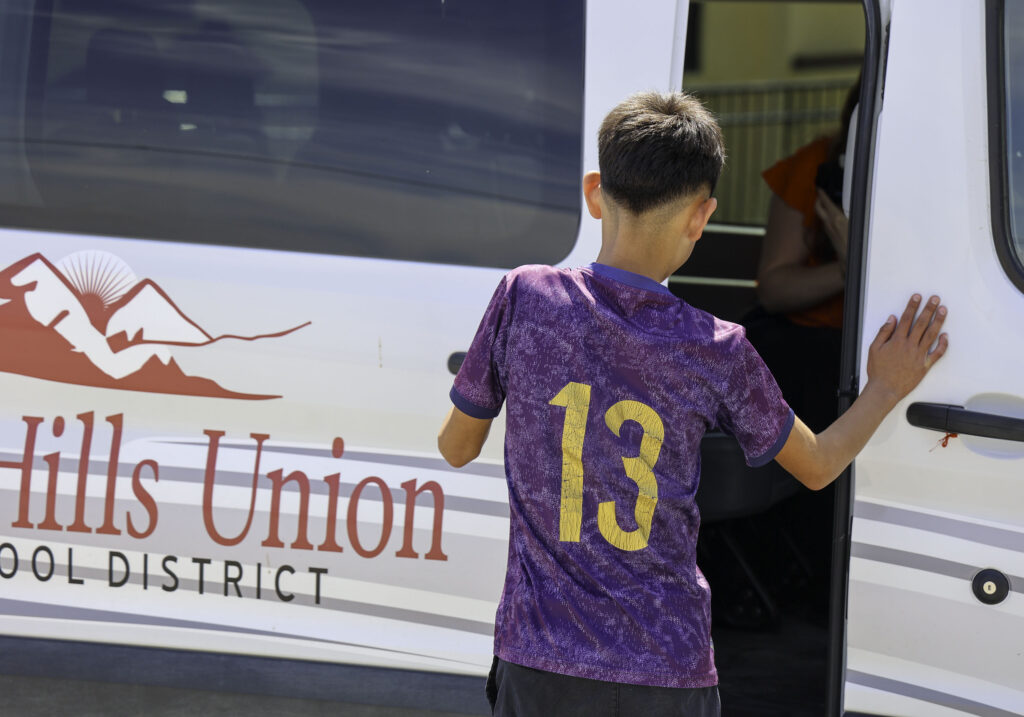
“It doesn’t matter where you are, we will come and get you.”
— Veronica Sanchez-Gregory
“In a rural community like ours, parents might have one car,” Favereaux said. “They don’t have to wait weeks to go to Bakersfield. They can come here to the school.”
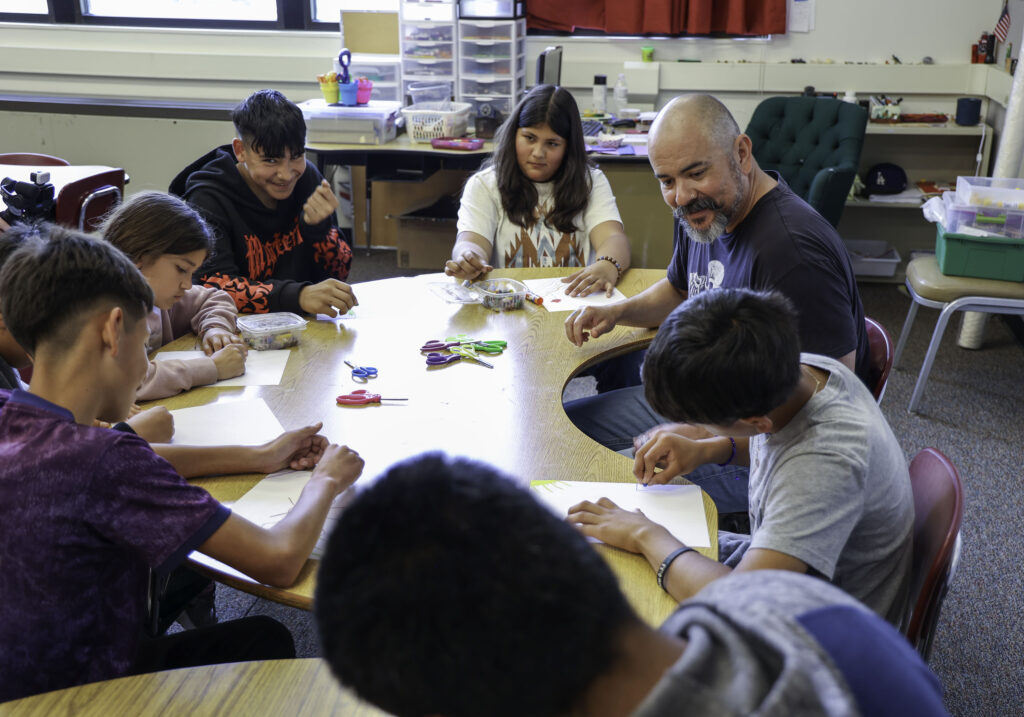
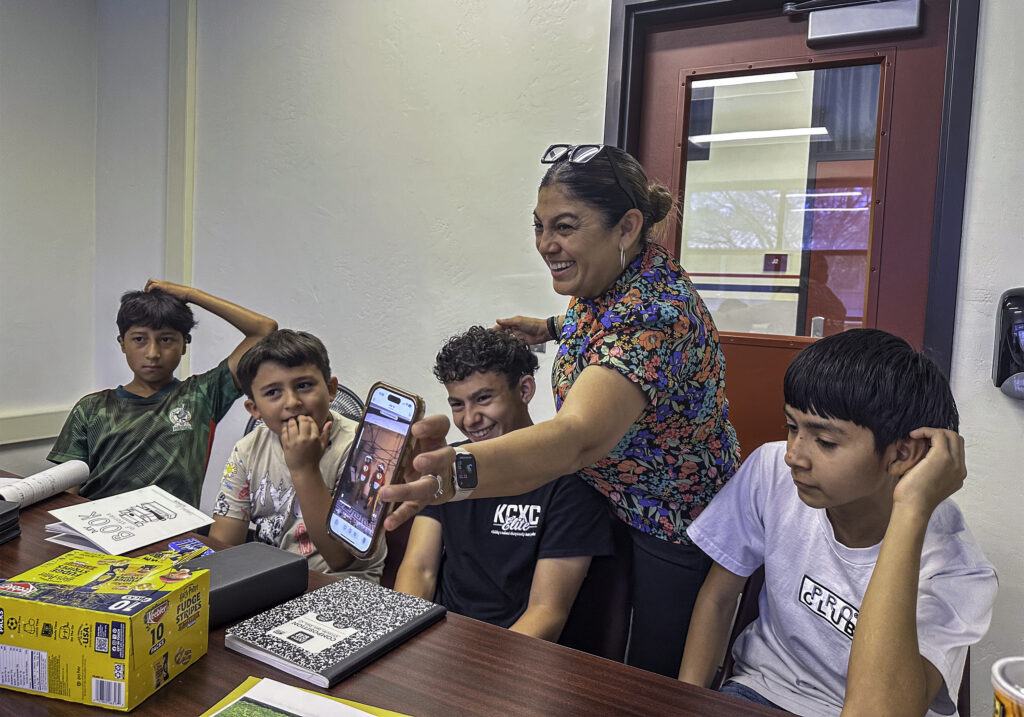
Administrators say it’s the relationships that make the biggest difference at Lost Hills. Every student is paired up with at least one adult through the district’s mentor program. Teachers, administrators, and even the superintendent serve as mentors.
“We wanted to make sure every child had a special connection with an adult,” Saso said. “That’s why Harrison knows six more kids really well every year, even though he’s in the district office.”
Those connections change everything — from discipline to attendance to academic motivation.
“One kid would run all the way across campus just to tell me good morning or shake my hand,” Favereaux recalled. “If they feel like they’re a part of the group, my experience is you don’t have nearly as many behavioral issues.”
The district’s positive school climate has earned statewide recognition, including PBIS Gold and Platinum implementation awards. Behavioral issues haven’t disappeared, but accountability now comes with trust and understanding.
“When kids know you care, they don’t want to disappoint you,” Saso said. “They try harder.”
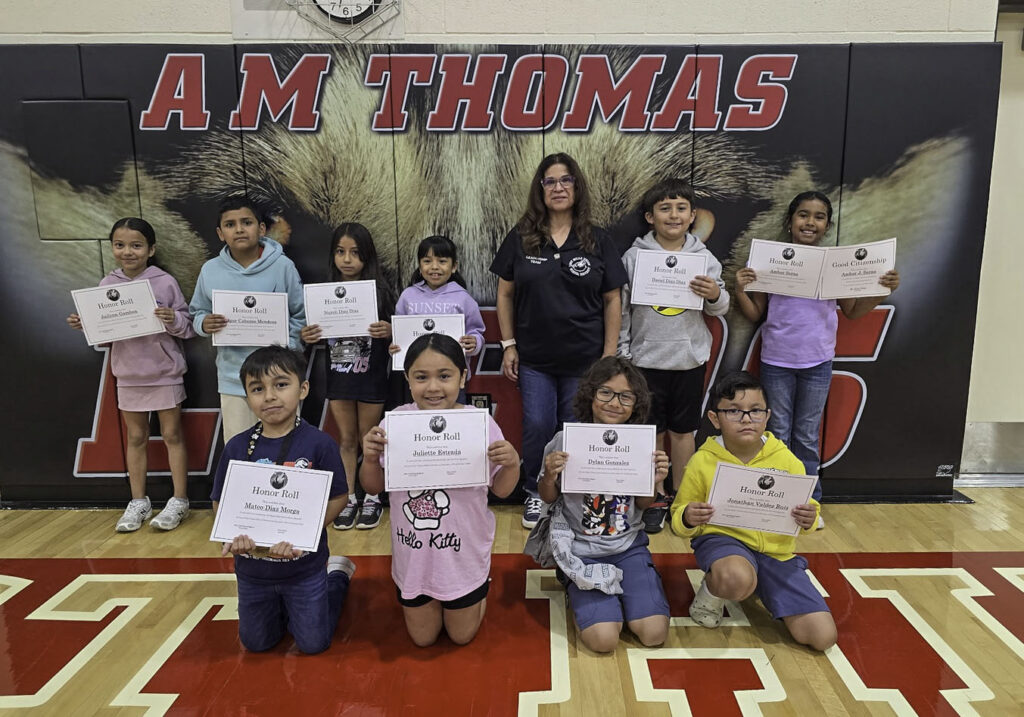
Lost Hills’ focus on climate and care does not come at the expense of academics. The district has earned California Distinguished School recognition, top academic growth in both English Language Arts and Math, and Kern County Impactful School honors for attendance.
“We knew academics had to be central to everything we did,” Saso said. “If we implement programs, we expect to see results in the classroom.”
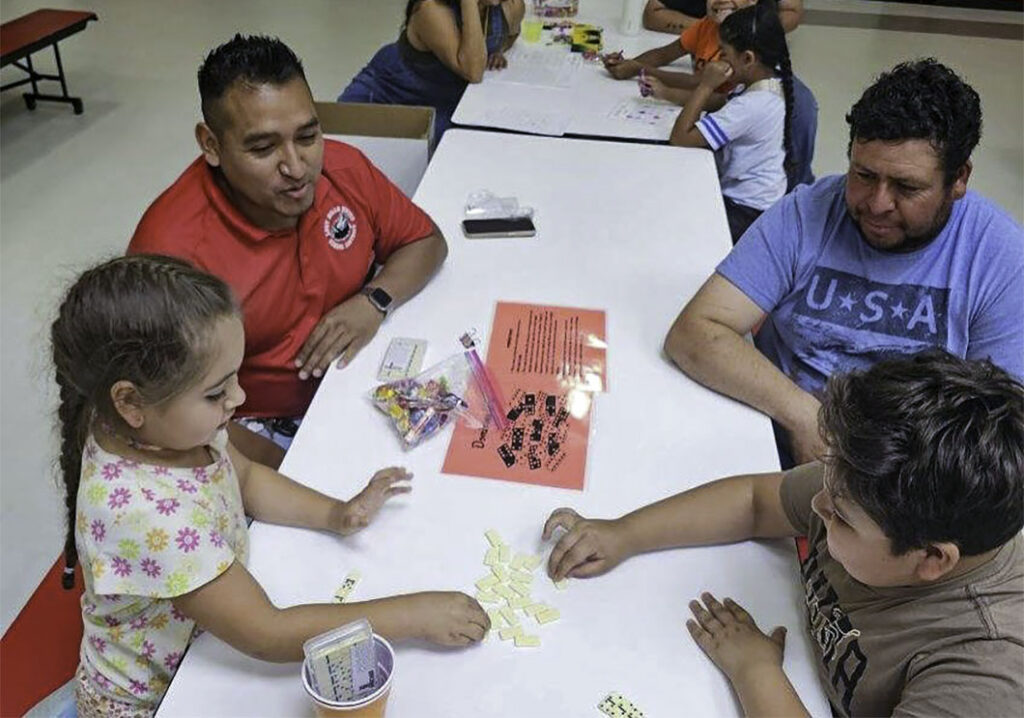
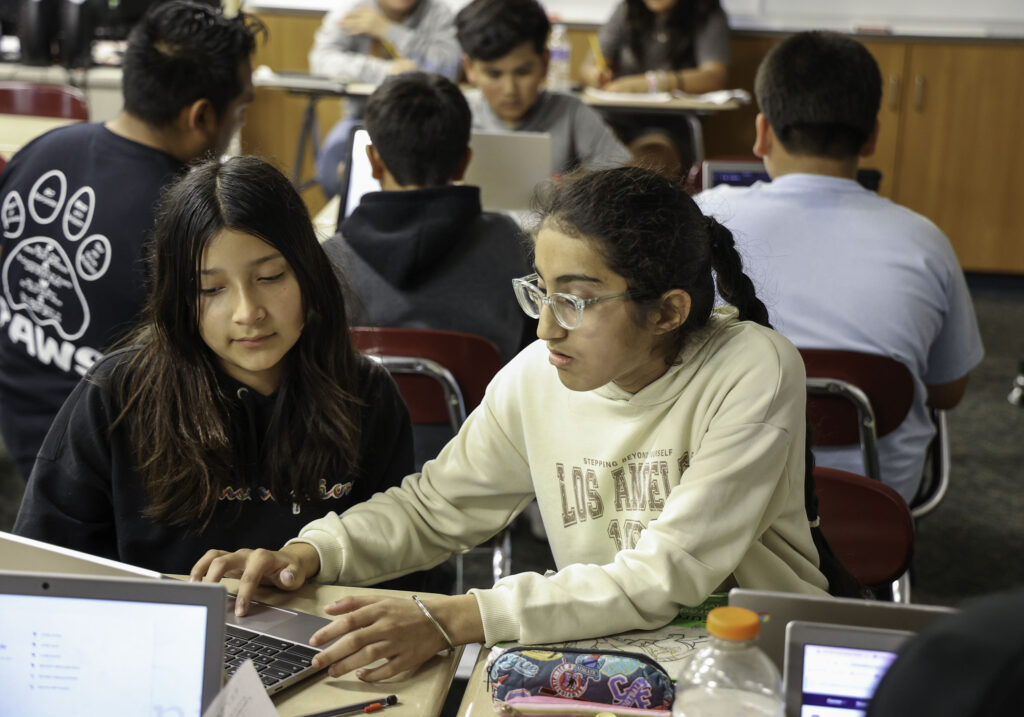
Extended learning is another point of pride for the district. Nearly 200 of the district’s 291 students participate in after-school programs that blend tutoring, enrichment, and fun — from art and STEM to Youth 2 Leaders and athletics.
“It’s really an extension of our school day,” Saso said. “Academics matter, but it also has to be fun.”



Many Lost Hills students participate in Cross Country or Track and Field athletics programs and even compete nationally.
Athletics, particularly cross country, have become a popular pastime among students. Twenty-two Lost Hills athletes recently competed in the AAU Cross Country National Championship competition in Tennessee. Several students ranked high in their individual events and made a great showing for Lost Hills on the national stage.
“Our students represented Kern County very well. We were part of a national team that won the whole event,” Sanchez-Gregory explained.
With decades of service behind them, the district’s leadership team is beginning to think about the future — ensuring that the culture they’ve built continues to flourish.
“We’ve been together a long time,” Sanchez-Gregory said. “We love this district, and we want to leave it in great hands.”
For Favereaux, pride comes from the consistent teamwork they’ve shown over the decades, making the time fly by.
“It should speak to you when we’ve all been here 20 plus years, and we’re not strangling each other,” he joked. “We get along as a team. It doesn’t seem like that many years to me.”
From a schoolhouse celebrated with a rodeo in 1913 to a nationally recognized community school more than a century later, Lost Hills Union School District demonstrates its longevity and continues to be the heart of its community while remaining deeply committed to its children.
“We have the world’s best students. They’re so amazing,” Sanchez-Gregory said. “They bring so much love, they make the work of it worthwhile.”


By Katie Avery
Katie Avery joined the Kern County Superintendent of Schools in 2023 as a Communications Specialist. As a former journalist and marketing professional, her passions include media and storytelling. Before joining KCSOS, Avery worked for various local TV stations as well as the health care industry.