
Hispanic Heritage Month: Lamont Students Celebrate Through Music, Dance
Tuesday September 15, 2026

When the final bell rings across Lamont Elementary School District (LESD), learning doesn’t end, it simply changes rhythm. Students trade their backpacks for vihuelas, guitarróns, and flowing, colorful skirts as they head to classrooms to warm up for mariachi and baile folklórico practice. In LESD, the After School Program is more than a place for students to wait for parent pickup; it is a lively stage where history, community, and heritage come alive.
Mariachi, a style of music, and folklórico, a style of dance, tell stories passed down through generations, carrying deep cultural meaning with every note and movement. For many Lamont students, these vibrant art forms have been part of their lives for as long as they can remember—heard at family celebrations and community gatherings, and even in the womb. Now, a new generation of young performers is stepping forward to honor that heritage and carry it into the future.
Three years ago, LESD’s Project Resource Director Cherie Olguin was watching the Lamont Christmas parade when a folklórico troupe caught her eye. She immediately recognized the value of bringing the tradition to the school district. She briefly spoke with Teresa Mendivil, the group’s instructor, and that conversation helped expand LESD’s musical foundation into a thriving performing arts community.
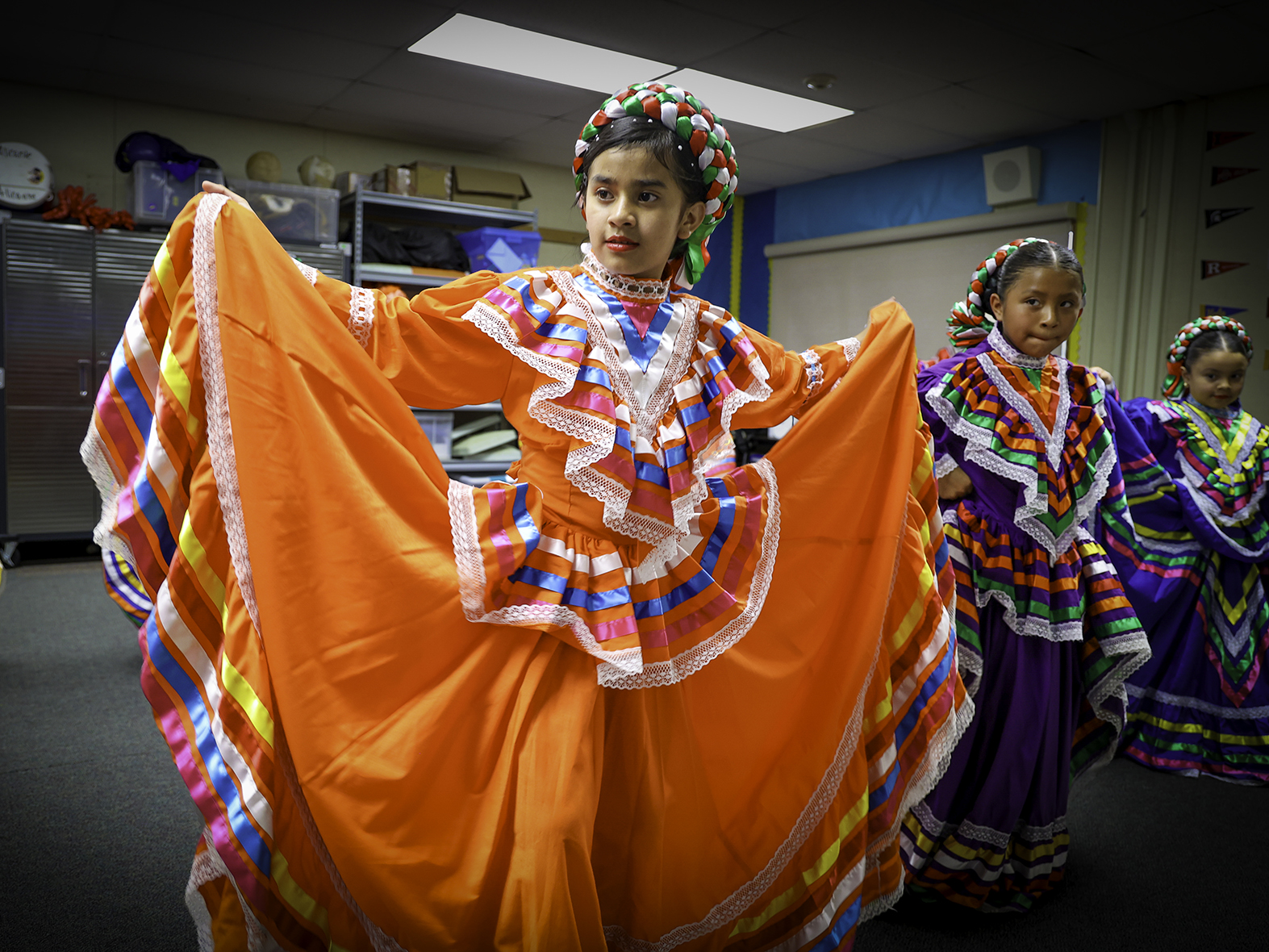
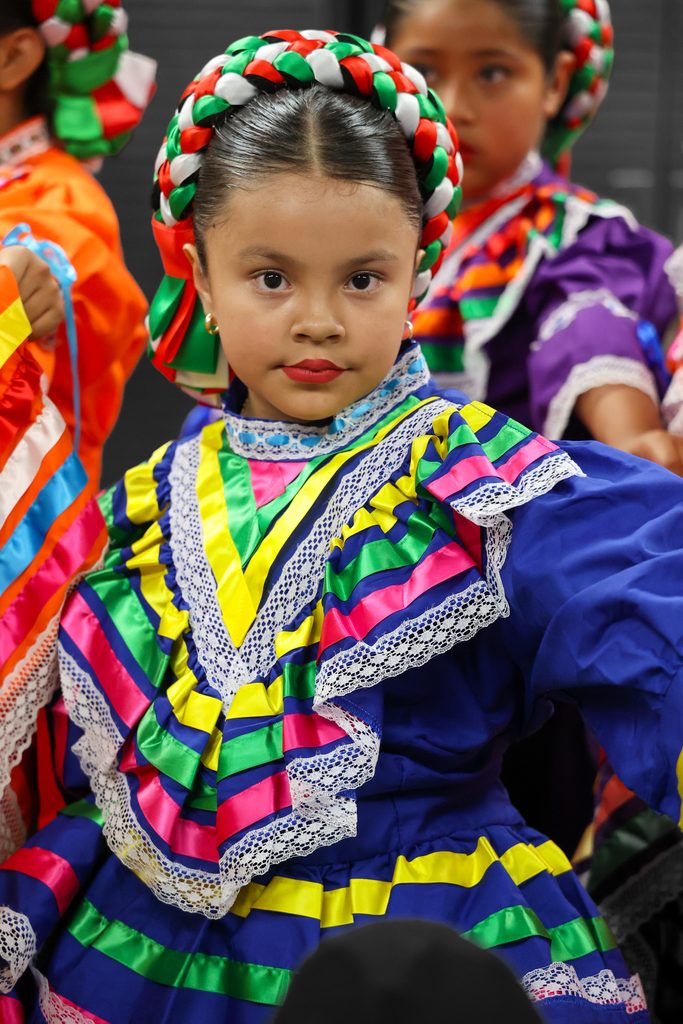
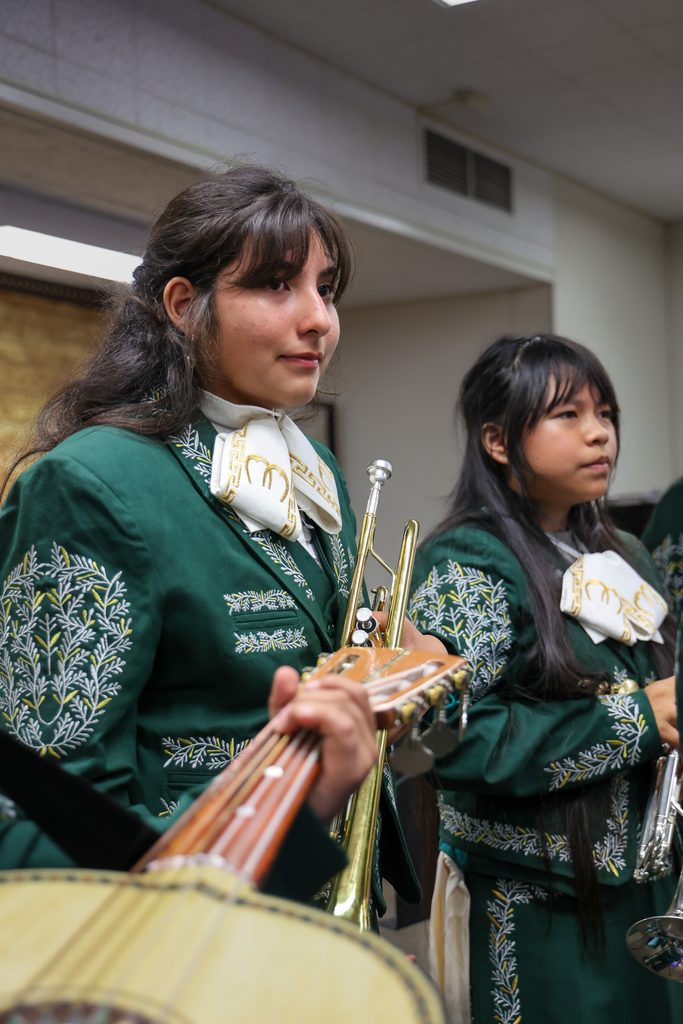
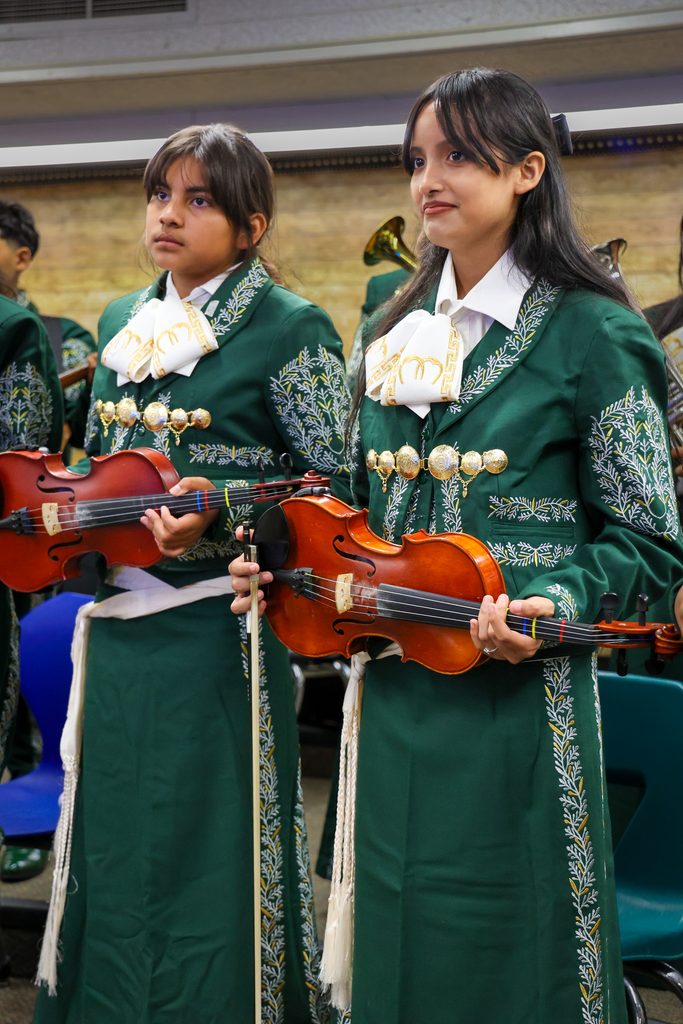
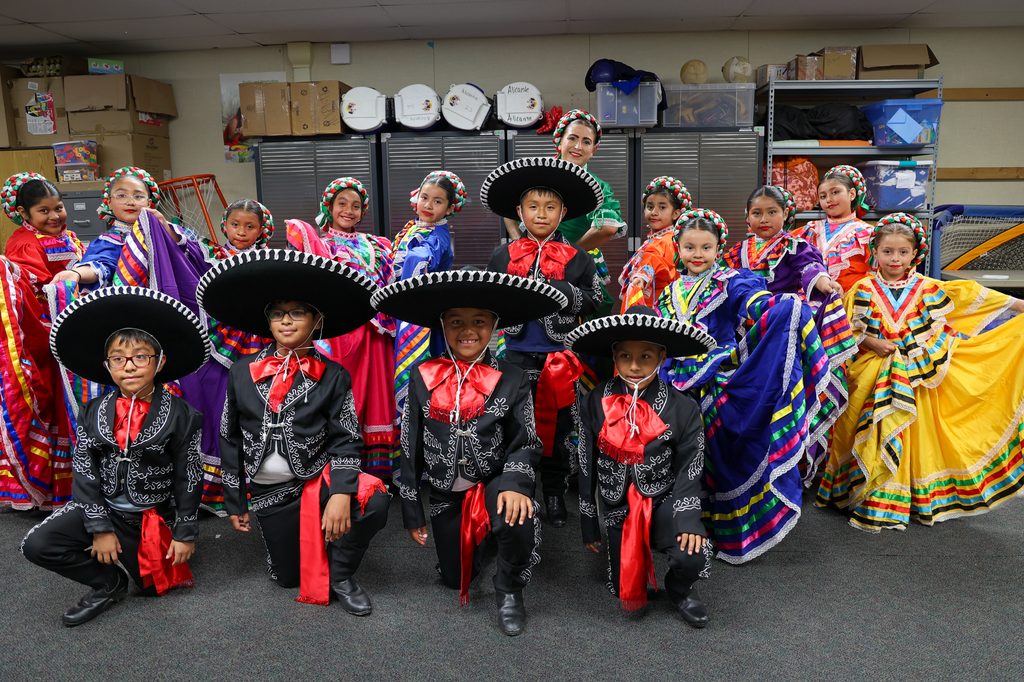
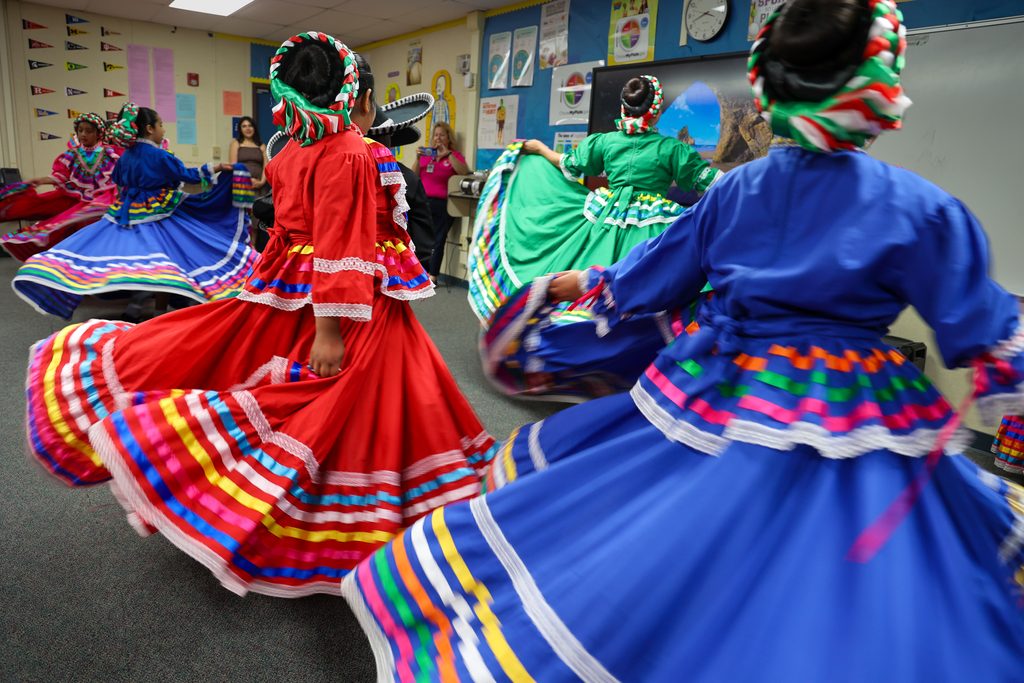
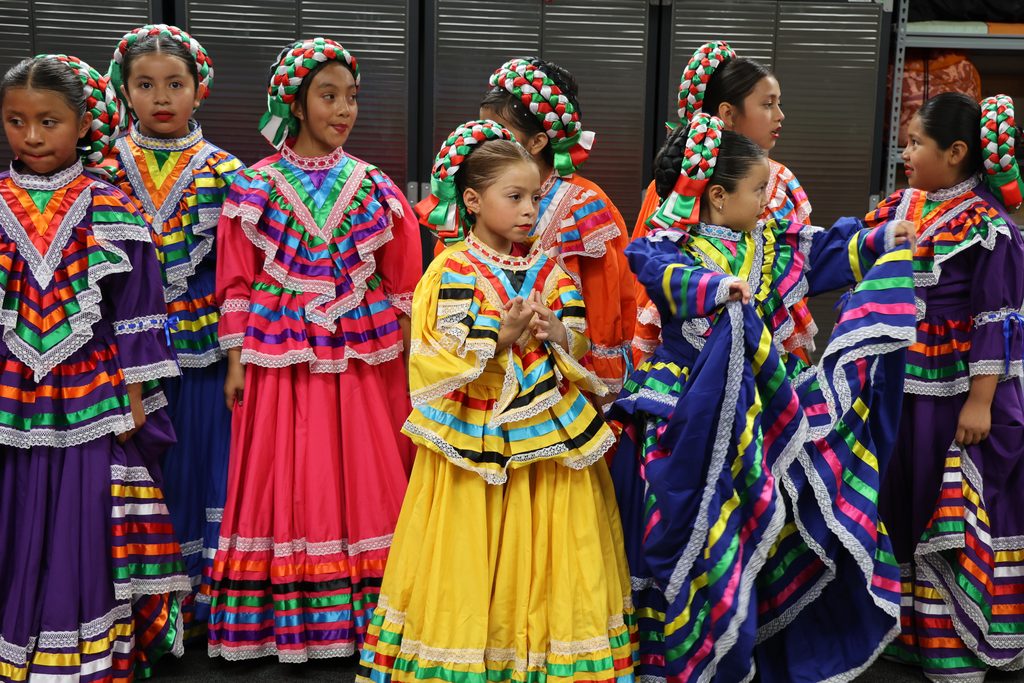
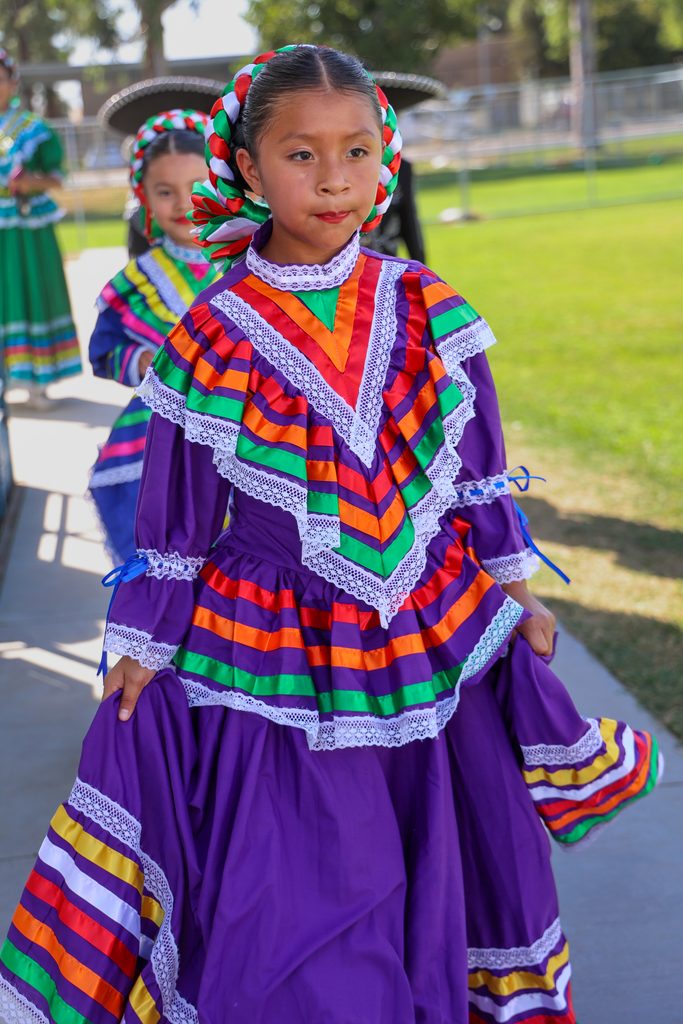
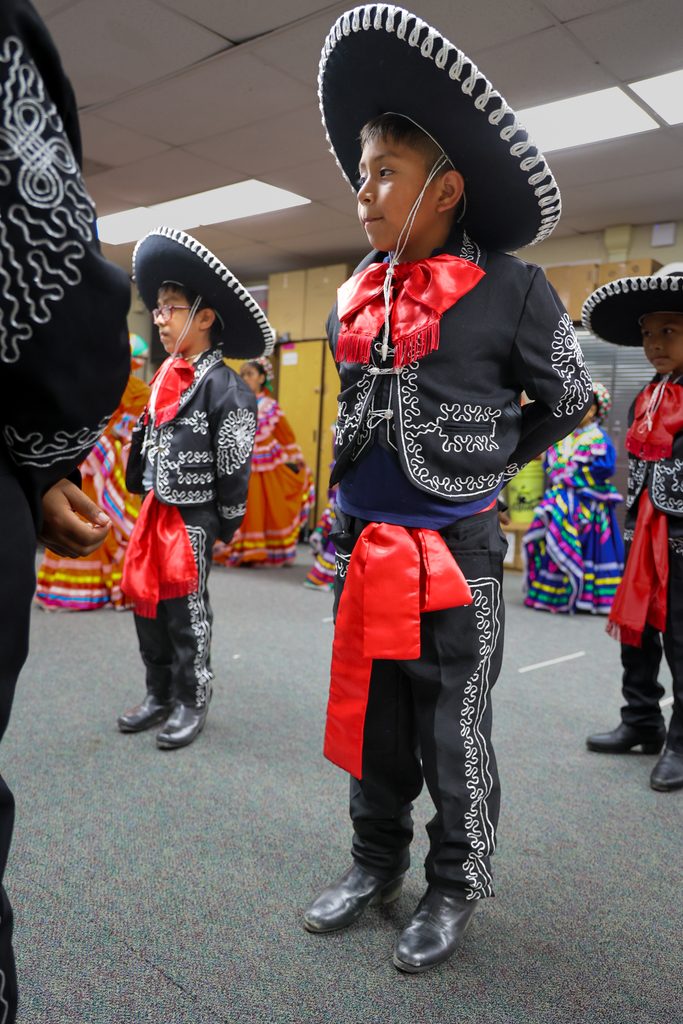
Baile folklórico is a theatrical performance that blends traditional Mexican regional dances with elements of ballet. Students explore the history of regions such as Jalisco, Veracruz, and Chiapas before mastering dances such as polka norteña. Mariachi is traditional Mexican folk music featuring brass and string instruments. The genre frequently accompanies folklórico dances, weaving the two art forms together.
The folklórico program welcomes students from TK through sixth grade through rotating weekly rehearsals.
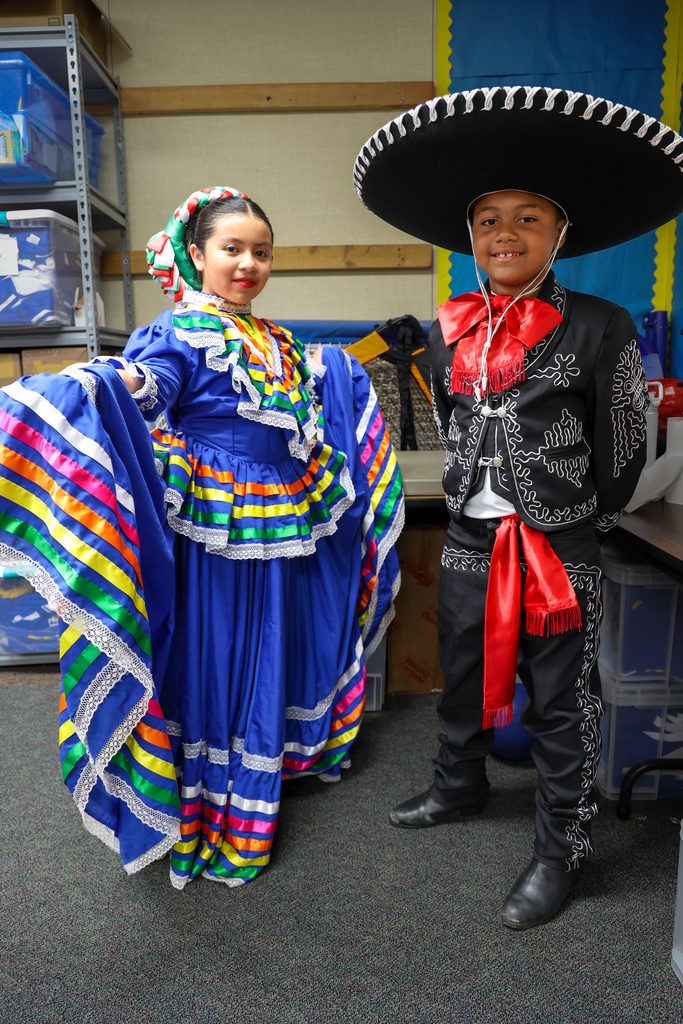
Evelyn Cordova, a fourth-grade student at Alicante Elementary School, has danced folklórico for two years.
“I feel really happy, ’cause I love dancing a lot,” Cordova said about her experience. “When I grow up, I want to be a dancer. I dance in my house to K-pop.”
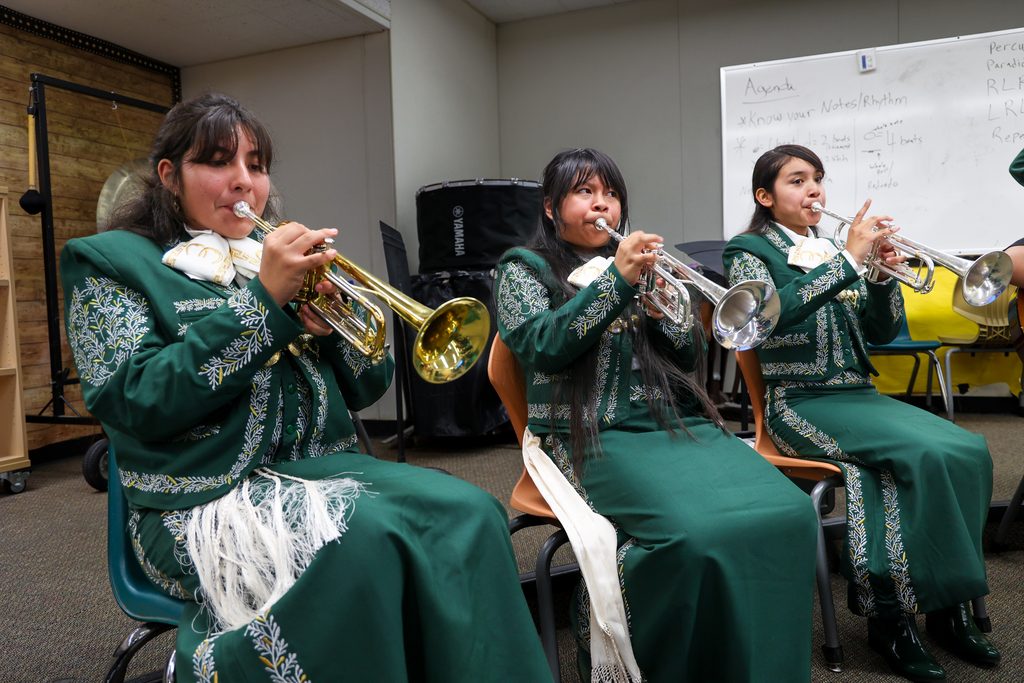
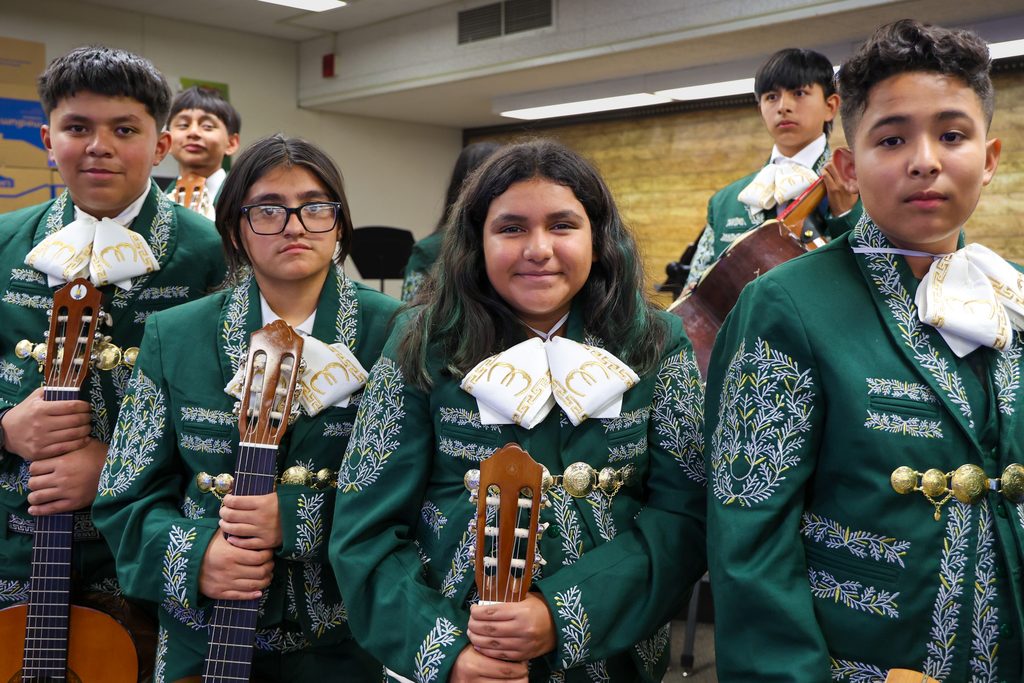
Mariachi begins in fourth grade, with rehearsals three times a week.
Noah Malachi Press, a third-grade student at Alicante Elementary School, has danced folklórico for four years.
“I like dancing to La Iguana,” he said.
Press sometimes performs a grito, the loud, emotional yell commonly heard in mariachi songs.
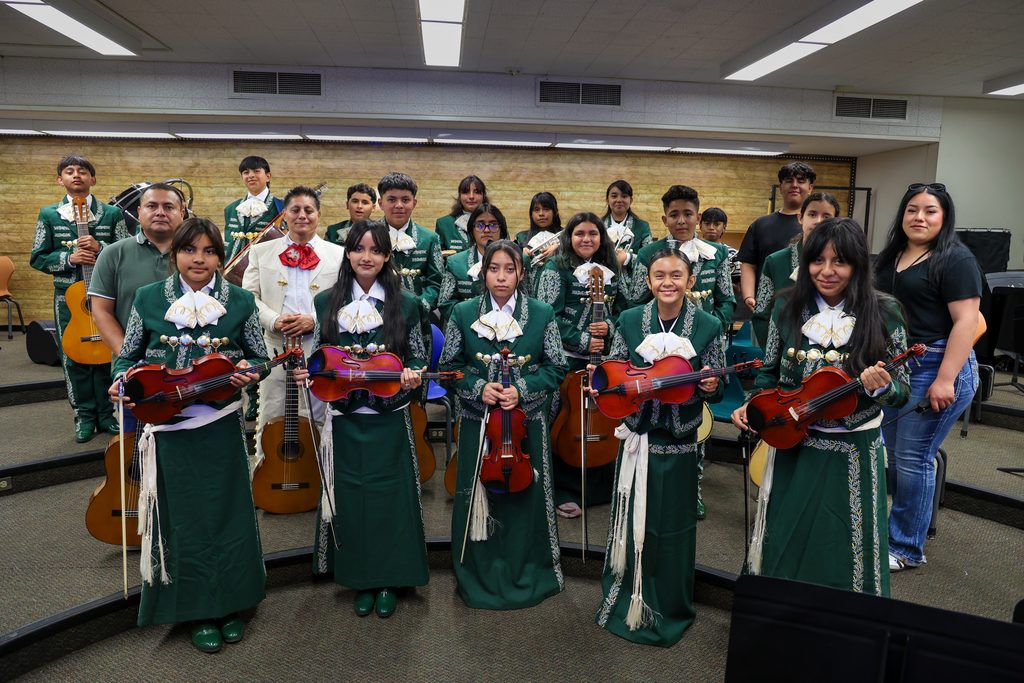
Today, more than 100 students participate in the district’s mariachi and folklórico programs. LESD accommodates all proficiency levels and provides instruments and outfits, making it possible for students to participate regardless of their experience.
The programs have also gained support from teachers.
“Mariachi students will learn a song throughout the day during school with the band teacher, and then after school, we’ll go over it again,” Juan Lopez, LESD’s Mariachi Coordinator, explained. “It’s a collaboration.”
Both instructors bring years of experience to the programs. Mendivil began dancing folklórico as a teenager at St. Augustine Church before becoming the group’s instructor. Her daughter now teaches folklórico at Chavez Collegiate High School in Delano.
Lopez began playing mariachi as a teenager with the Kern County Youth Mariachi Foundation, now Mariachi Sun Foundation, and currently leads Mariachi Aguilas de Bakersfield.
The connection to mariachi and folklórico often carries into students’ lives outside the classroom. They quickly recognize the art forms as cultural markers that connect them to their families and communities.
“A lot of the time, the students will share stories from whatever we’re dancing,” Mendivil said. “I’ll talk about where the dance came from, and kids will say, ‘Oh, that’s where my grandma lives,’ or ‘I went there last year.’”
Lopez sees mariachi students make similar connections.
“One of the more profound things that I’ve noticed is how impactful it is for a student to learn Cielito Lindo in school and go home and practice it and for their grandma or their parents,” he said.
Julio, a seventh-grade student at Mountain View Middle School, is a second-generation guitarrón player and has played the instrument for three years. The guitarrón serves as the bass for mariachi. Julio enjoys attending mariachi class because he prefers it to the general After School Program activities.
“Mostly, I look forward to mariachi because my dad used to play for a mariachi group,” he shared. “I’m looking forward to going into a group.”
Teresa Aguilar, a seventh-grade student from Myrtle Avenue Elementary School, started playing mariachi for the first time this month. She grew up listening to mariachi music and is already familiar with many of the songs.
“I like that I’m learning the trumpet,” Aguilar said. “I’m looking forward to playing really high notes.”
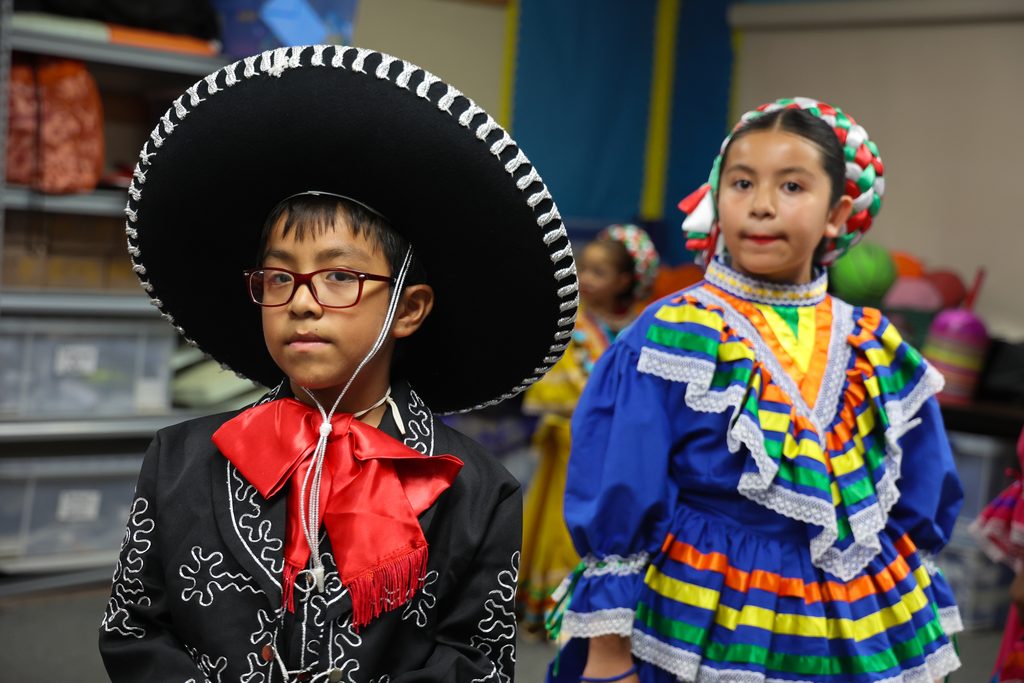
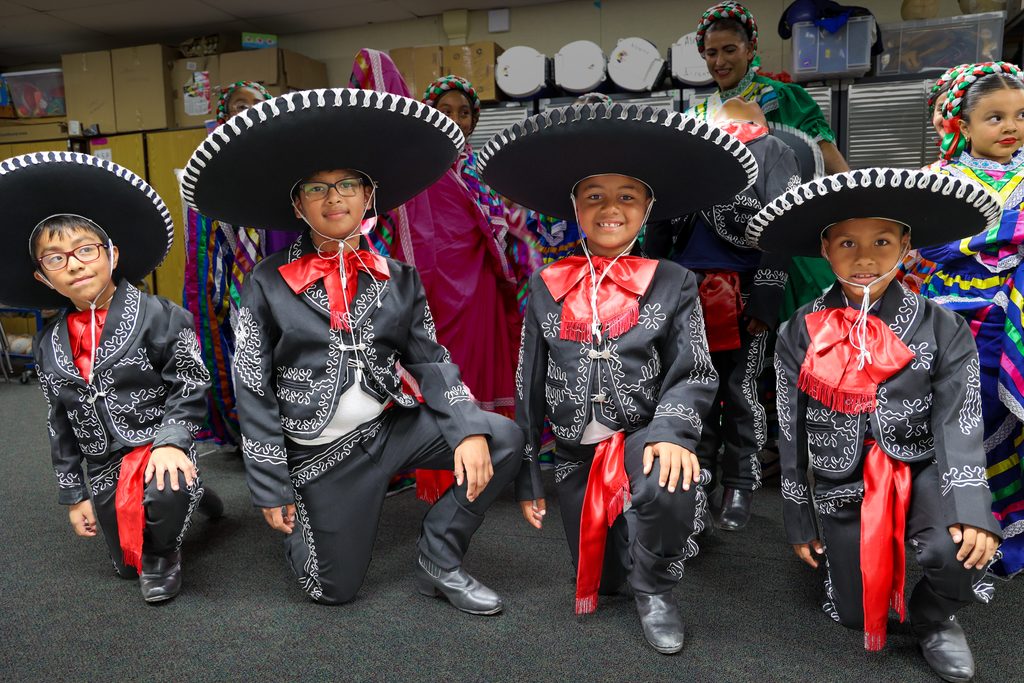
The students’ connection to their heritage comes especially alive during performances. Parents help dress students in traditional attire: girls in vivid dresses with ribbons and braided hair, and boys in tailored mariachi trajes with sombreros and boots.
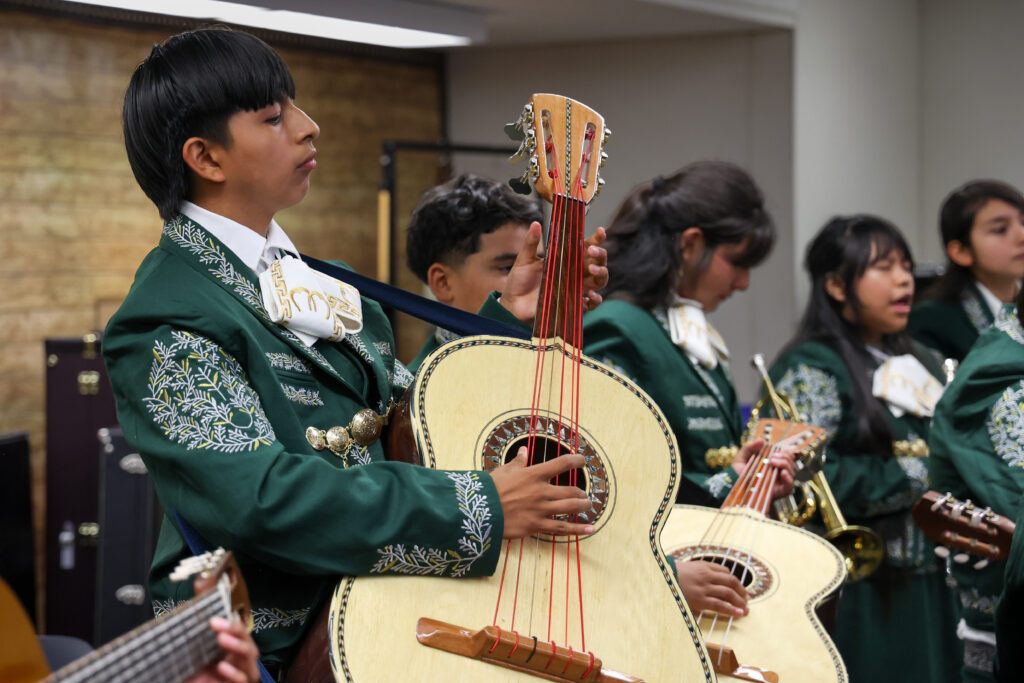
“Mostly, I look forward to mariachi because my dad used to play for a mariachi group. I’m looking forward to going into a group.”
– Julio, 7th grade
“I feel really happy, ’cause I love dancing a lot.”
– Evelyn, 4th grade
Last school year, Olguin organized an end-of-year showcase, believing students would benefit from the performance experience. The event quickly became standing-room-only, leaving parents and staff members in awe of the students’ stage presence.
“I had parents tell me, ‘I was crying! I couldn’t believe my son was up there dancing,’” Mendivil shared. “They were amazed to see their child on a big stage.”
While folklórico and mariachi can become careers, competitive pursuits, and even lifestyles, Lopez emphasized that the goal isn’t to train future professional musicians. Instead, the programs give students space to explore their interests while connecting with their roots.
“The students have come a long way in three years, Olguin reflected. “They are not afraid to sing—they want to sing.”
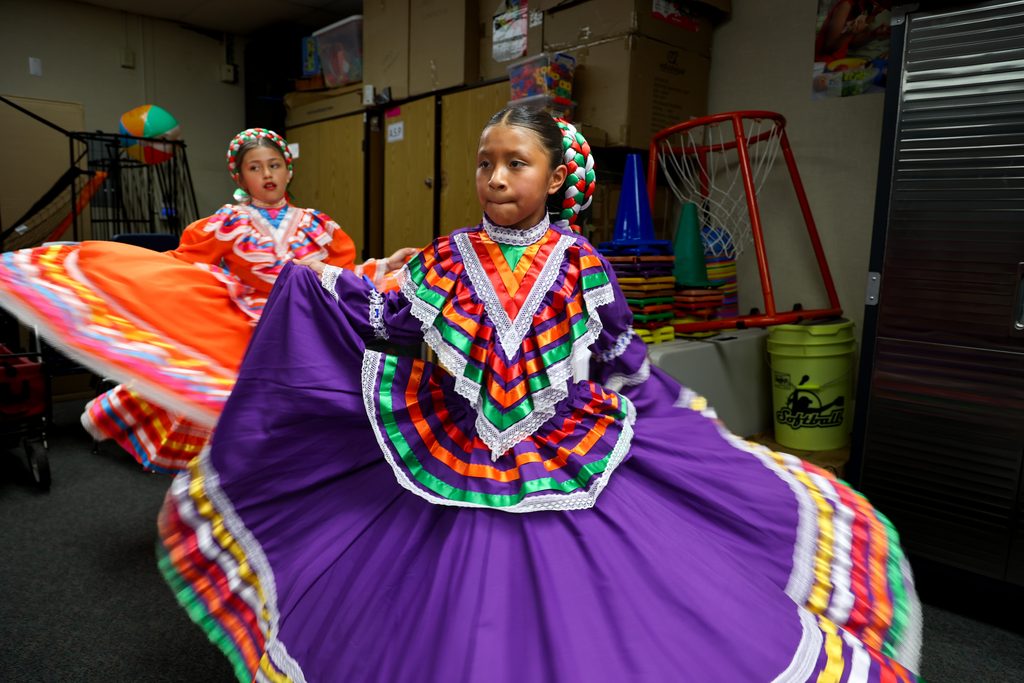
Photo Gallery

By Natalie Hernandez
Natalie Hernandez joined the Kern County Superintendent of Schools as a Communications Specialist in 2026. She previously worked in Bay Area public relations, supporting education, government, health care, and nonprofit organizations. Hernandez is passionate about using storytelling to inform and engage the public.