
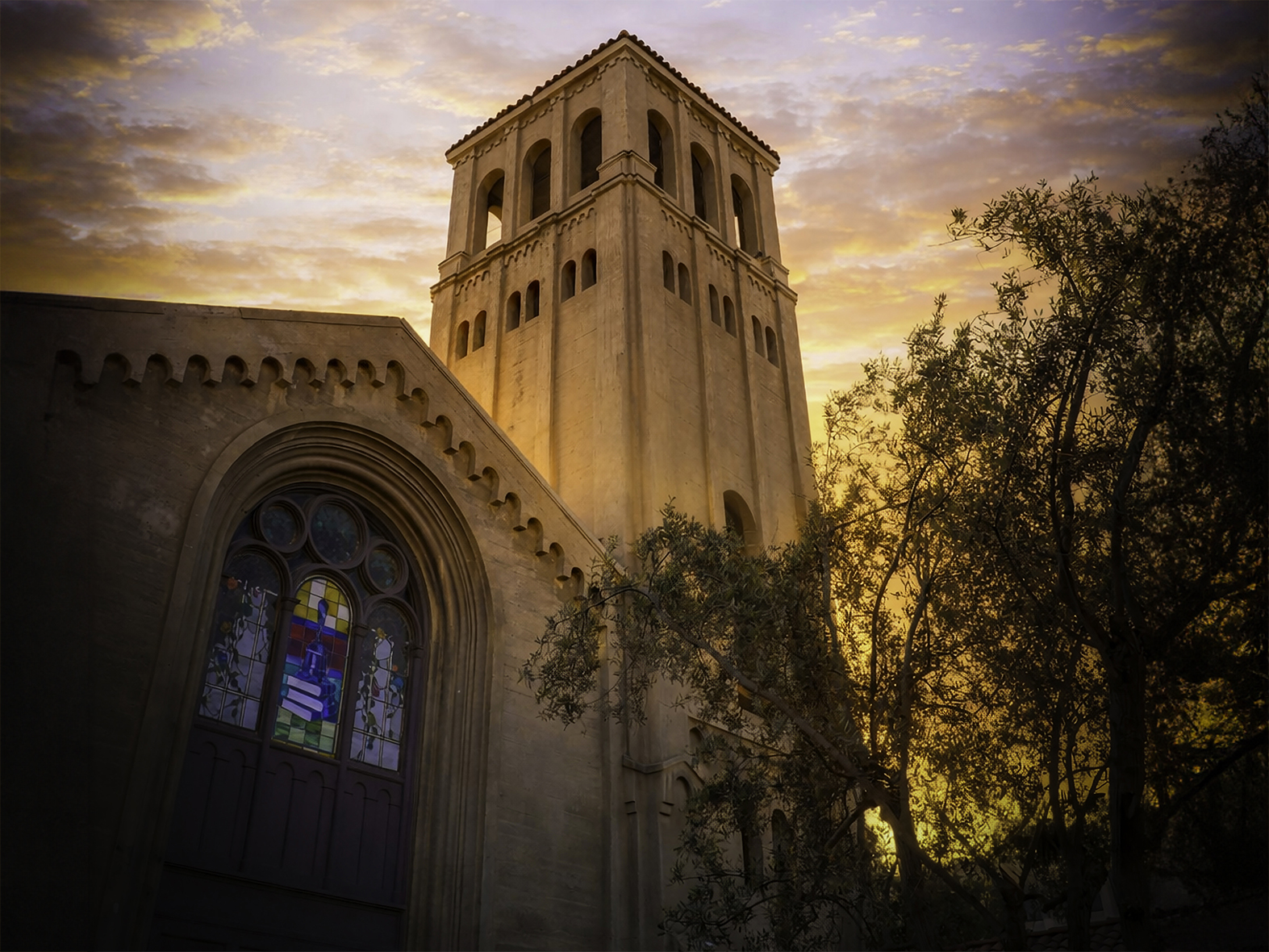
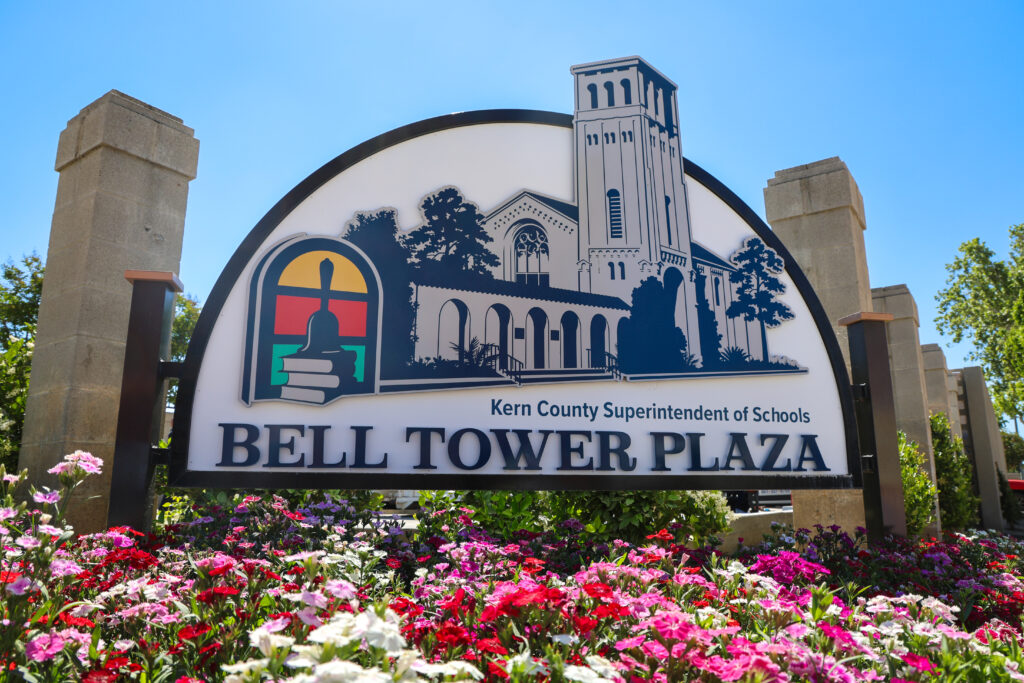
Standing just outside the former chapel of the historic Bell Tower Plaza in downtown Bakersfield, KCSOS Manager of Facilities George Carson gestured across the open courtyard and offered a simple assessment of the building’s condition.
“The structure, yeah, it’s 100 percent,” he said.
That structural integrity became the foundation for a two-year transformation overseen by Carson that has now restored the nearly century-old landmark and reimagined it as the Kern County Superintendent of Schools’ signature professional learning and events center.
KCSOS hosts hundreds of trainings, workshops, and meetings each year, supporting educators and community partners across Kern County. Back in 2023, the Bell Tower’s previous owners approached KCSOS about a potential purchase, knowing the organization was seeking additional space in downtown Bakersfield. KCSOS closed escrow in December 2023, and planning for the building’s future quickly began.
“The facility is perfectly positioned to complement our neighboring buildings downtown,” said Kern County Superintendent of Schools Dr. John Mendiburu. “This new space will allow us to better accommodate workshops and trainings for the benefit of Kern County educators and the students we collectively serve.”
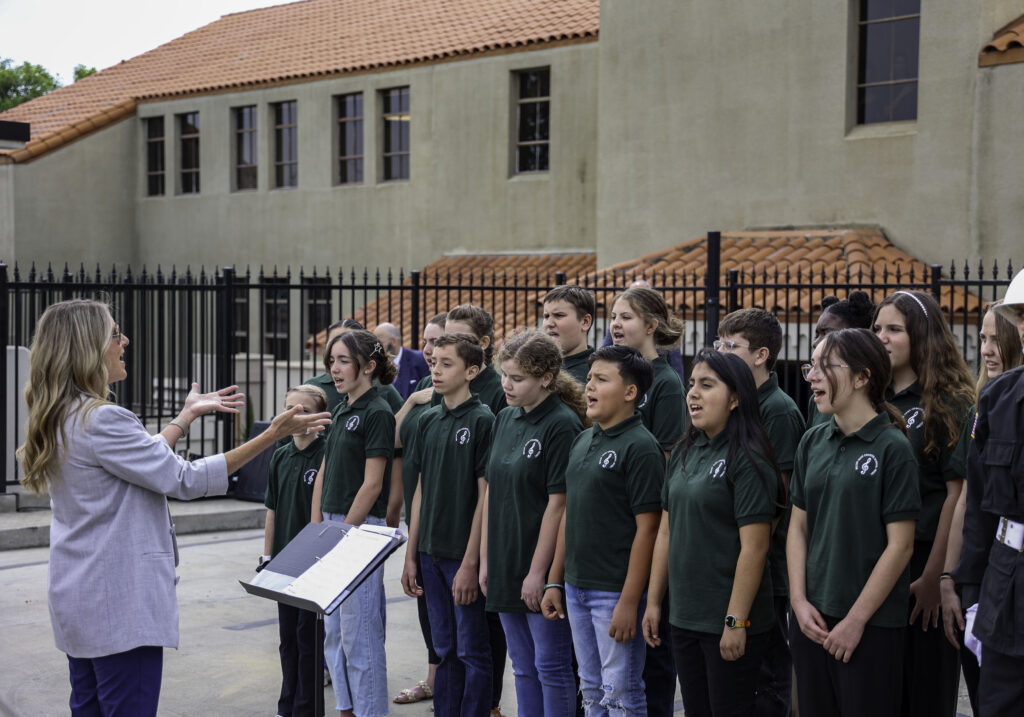
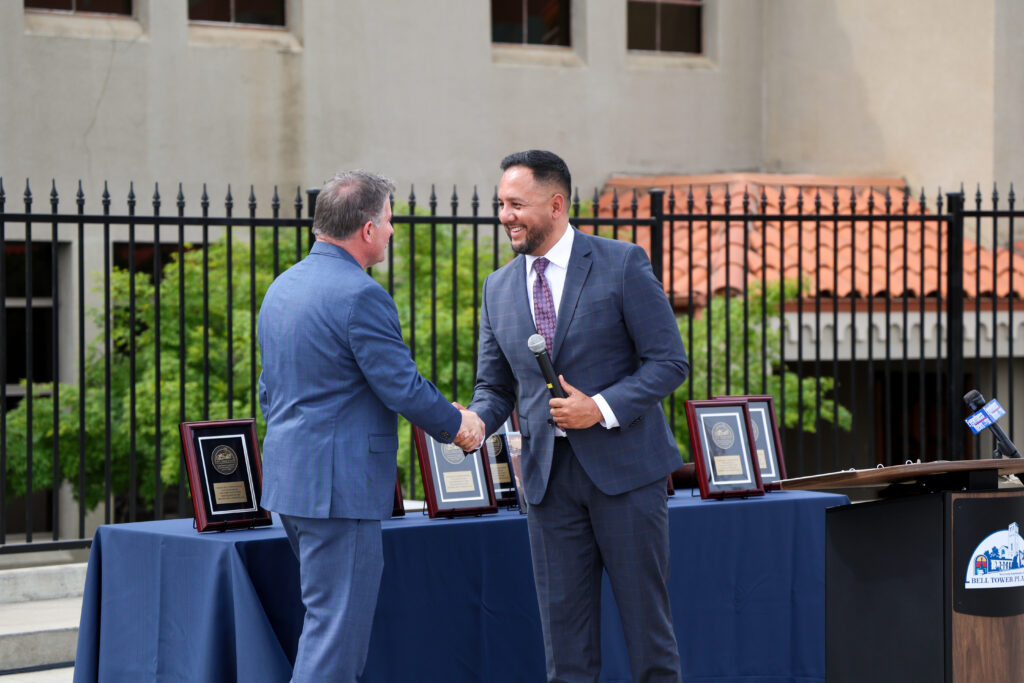
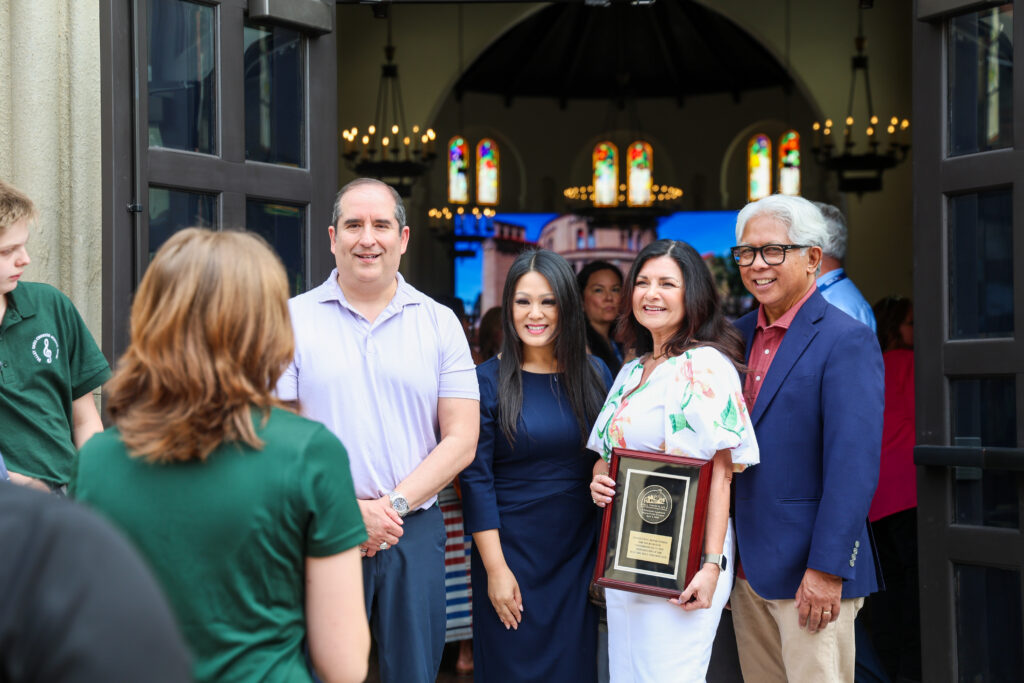
On April 9, dozens of educators, community partners, and local leaders gathered for the official ribbon-cutting ceremony. Guests toured the revitalized facility, exploring the restored architectural features alongside modern upgrades.
“It’s spectacular,” said local businessman Morgan Clayton while touring the remodeled facility. “What it’s transitioning into will make it even better. I’m just thinking about everything you could do here. It’s really great because it brings everyone together.”
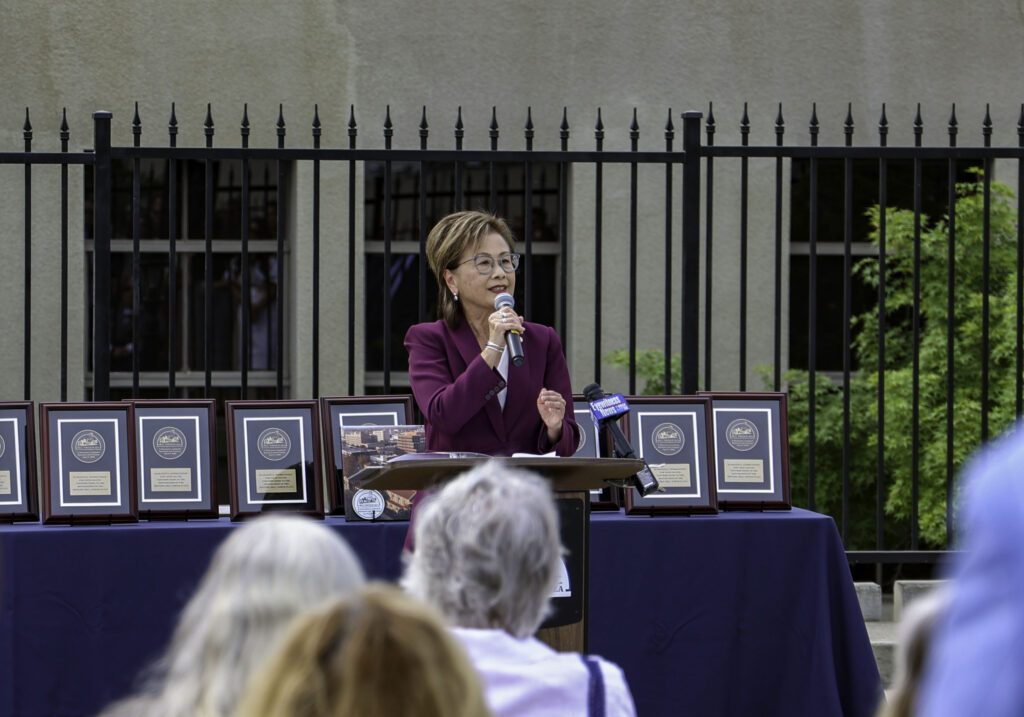
Bakersfield Mayor Karen Goh echoed that sentiment during the ceremony.
“Today we celebrate much more than a beautiful building,” she said. “We celebrate a generation of leaders who will be preparing the next generation of leaders.”
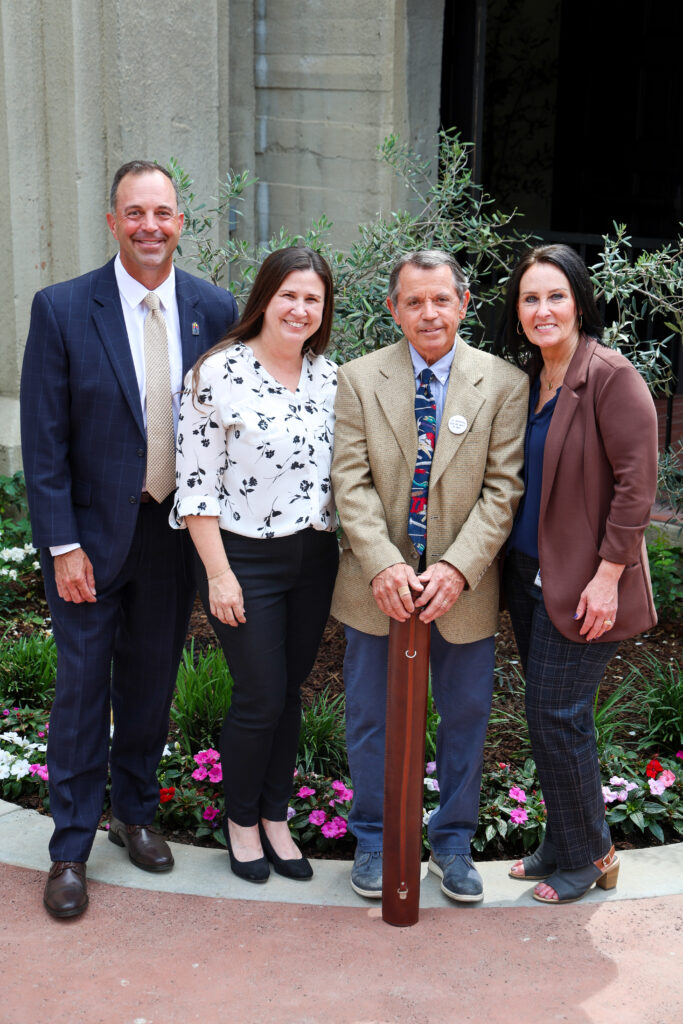
Left to right: Christian Shannon, Deputy Superintendent of Operational Support; Beth Davis, Facilities Planner; George Carson, Facilities Manager; and Christy Scoggins, Senior Director of Facilities, were instrumental in bringing the Bell Tower Plaza project to life.
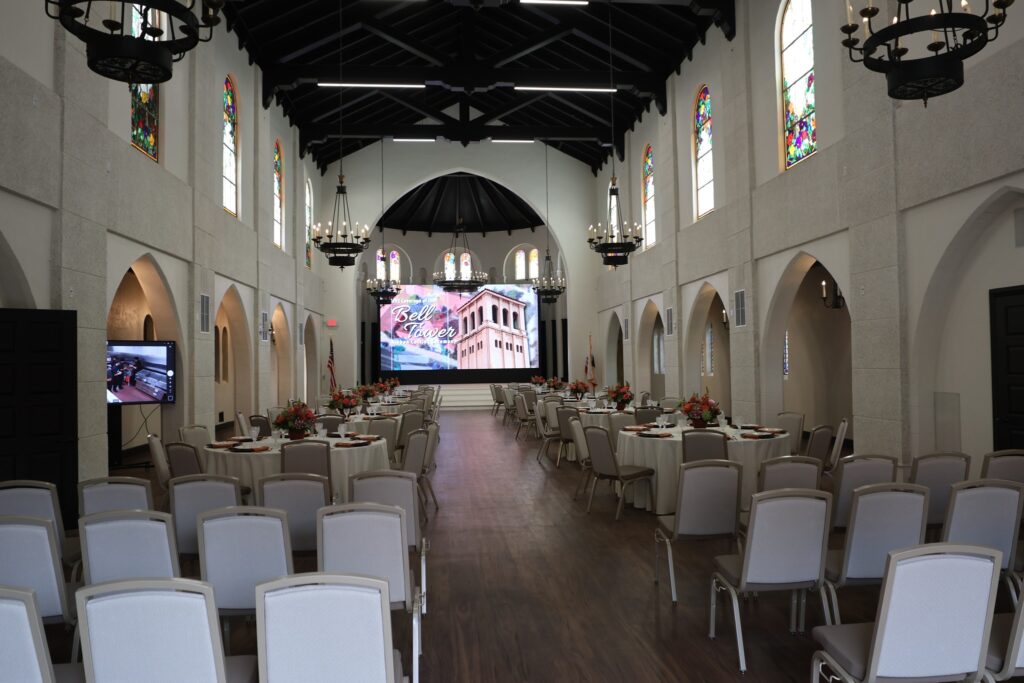
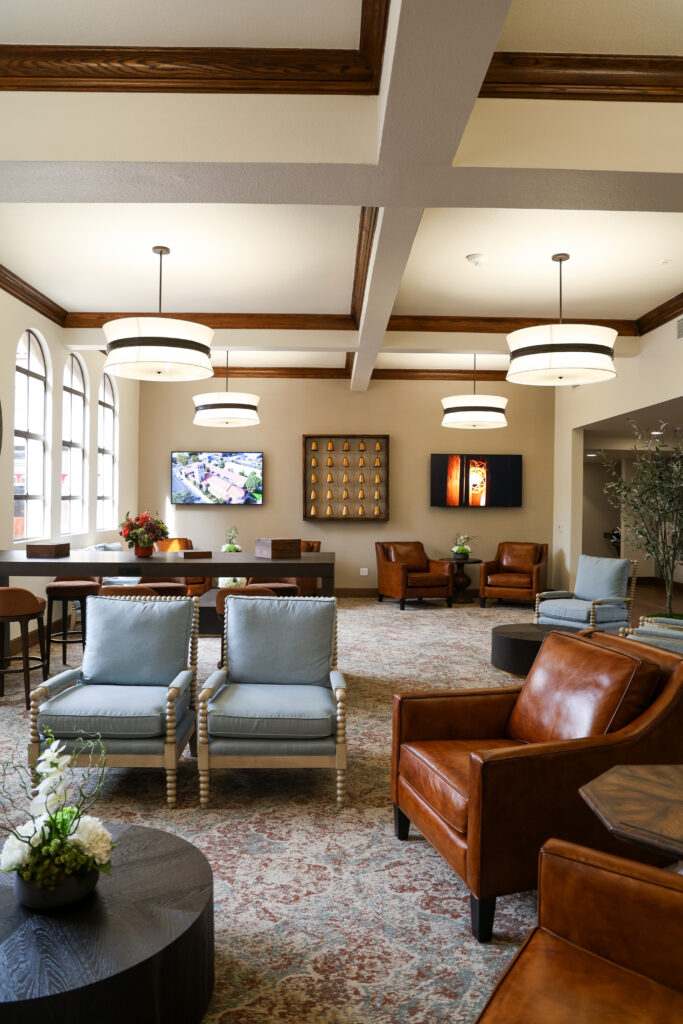
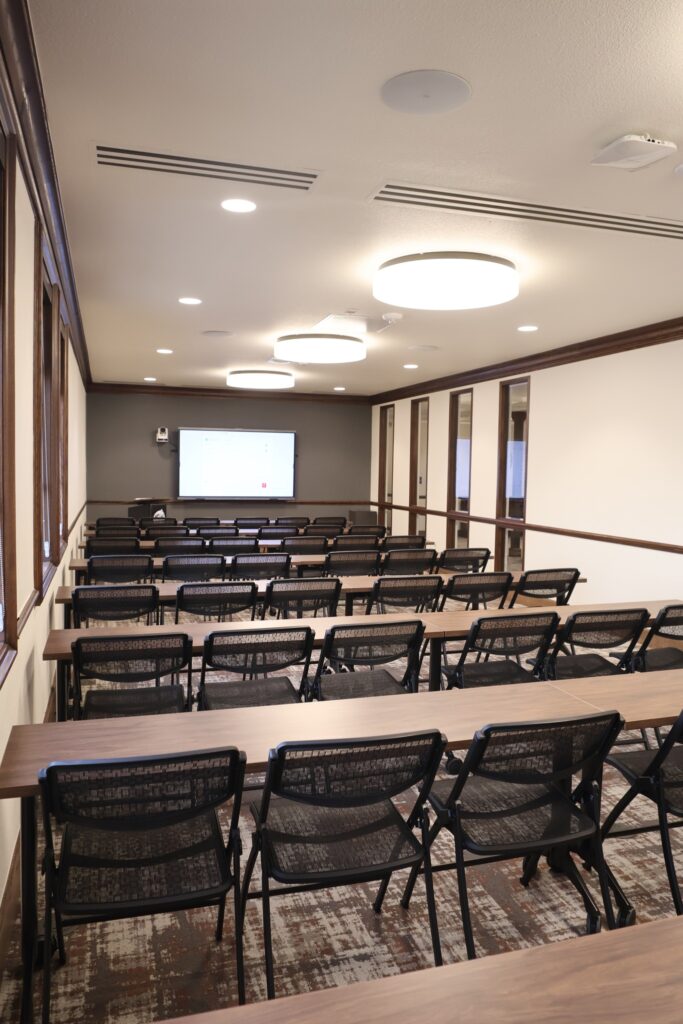
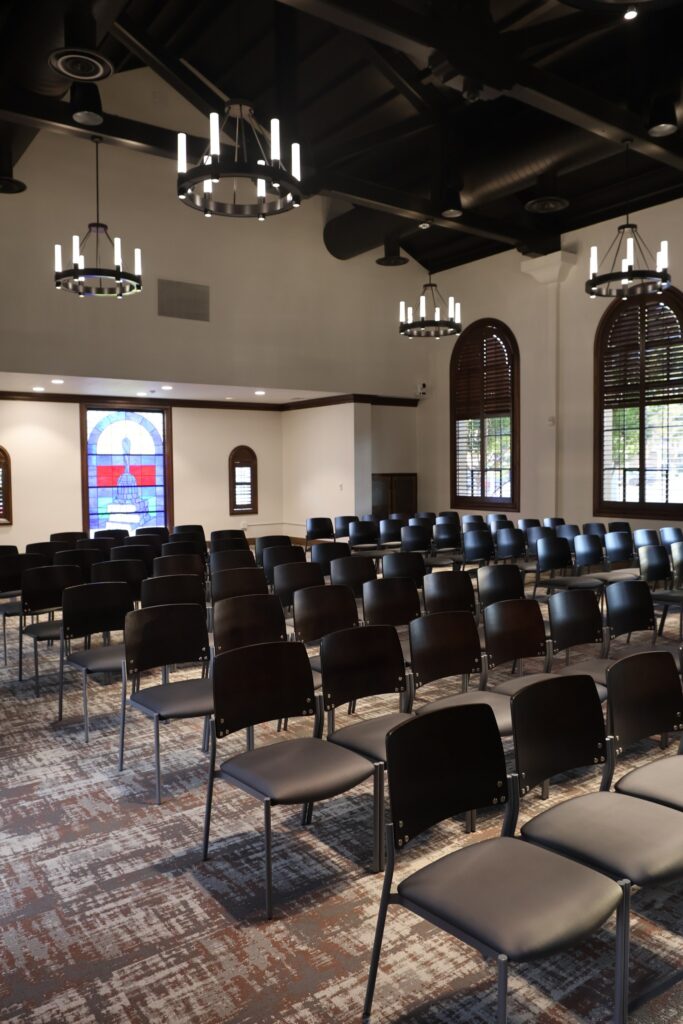
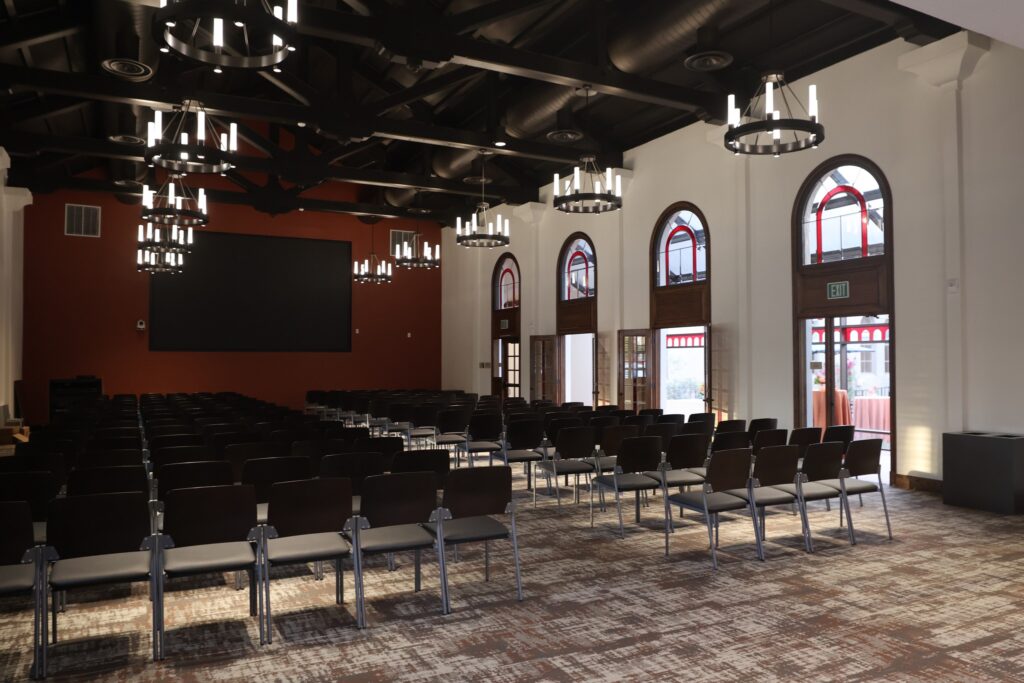
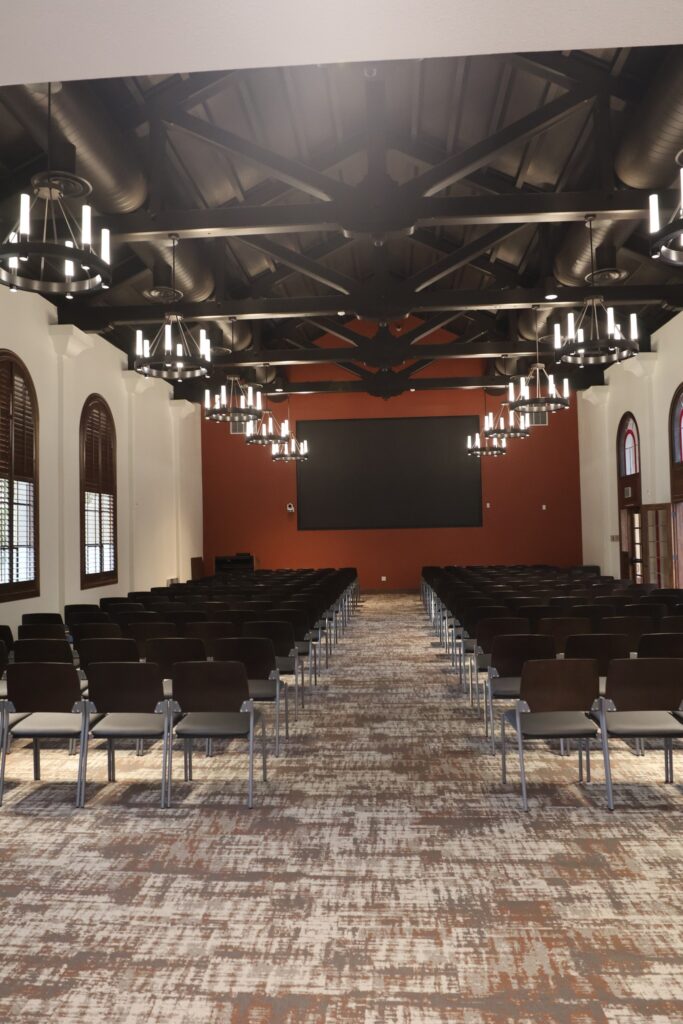
The Bell Tower Plaza offers flexible meeting and training space for small and large workshops, meetings, and events.
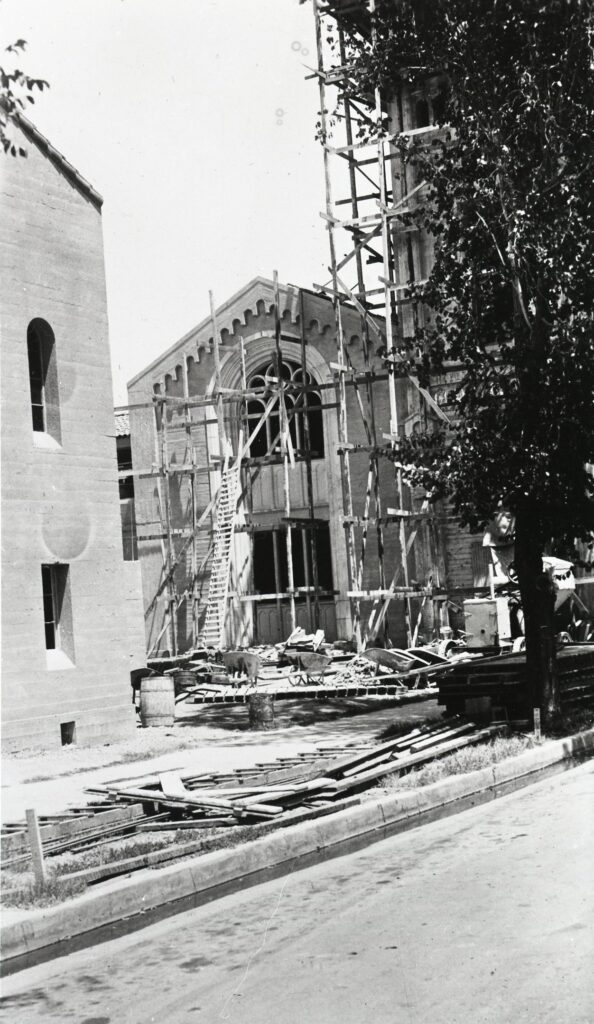
Originally completed in the fall of 1932 and designed by prominent Bakersfield architect Charles H. Biggar, the Bell Tower served as the home of First Baptist Church until 1977. Biggar was responsible for many notable buildings across Kern County, including Bakersfield High School, the original Bakersfield Junior College campus, East Bakersfield High School, Kern County General Hospital, The Bakersfield Californian building, and Taft High School.
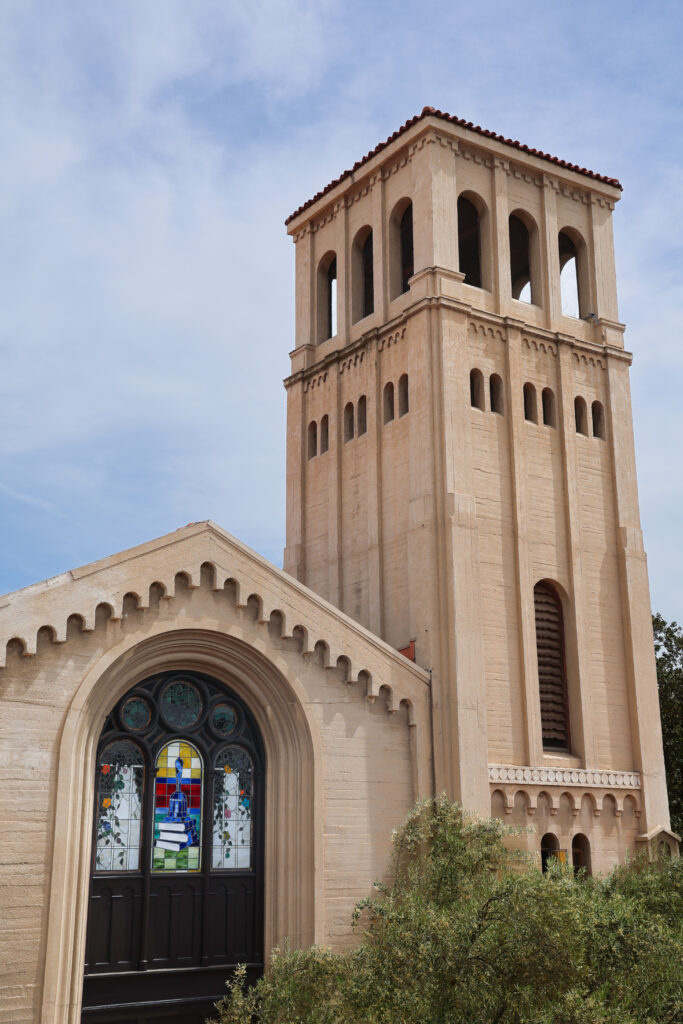
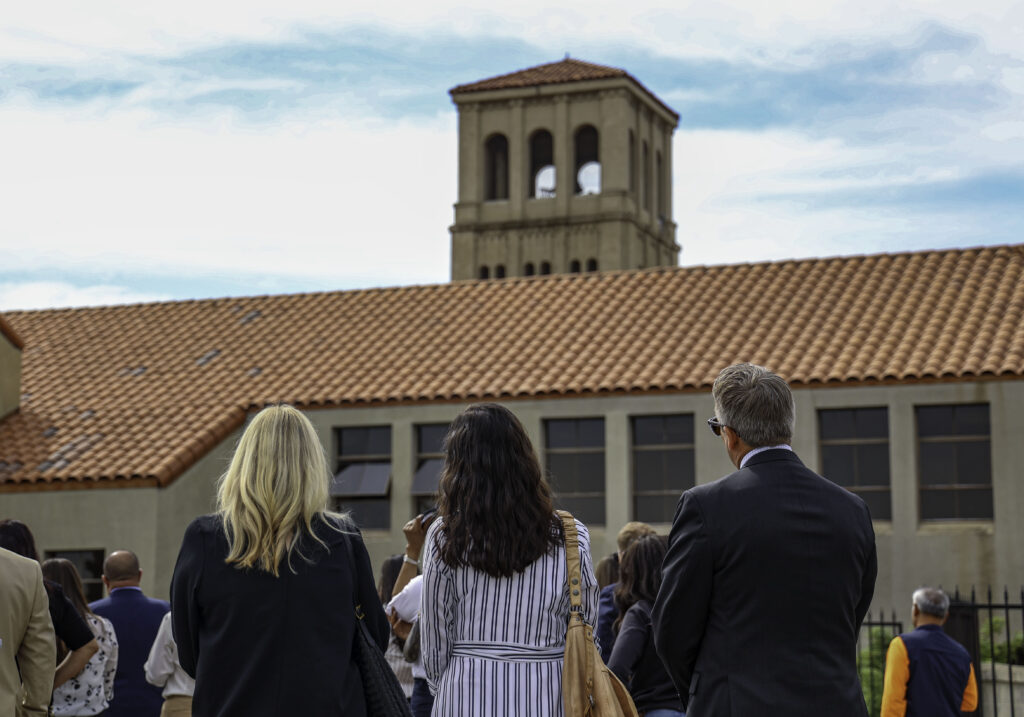
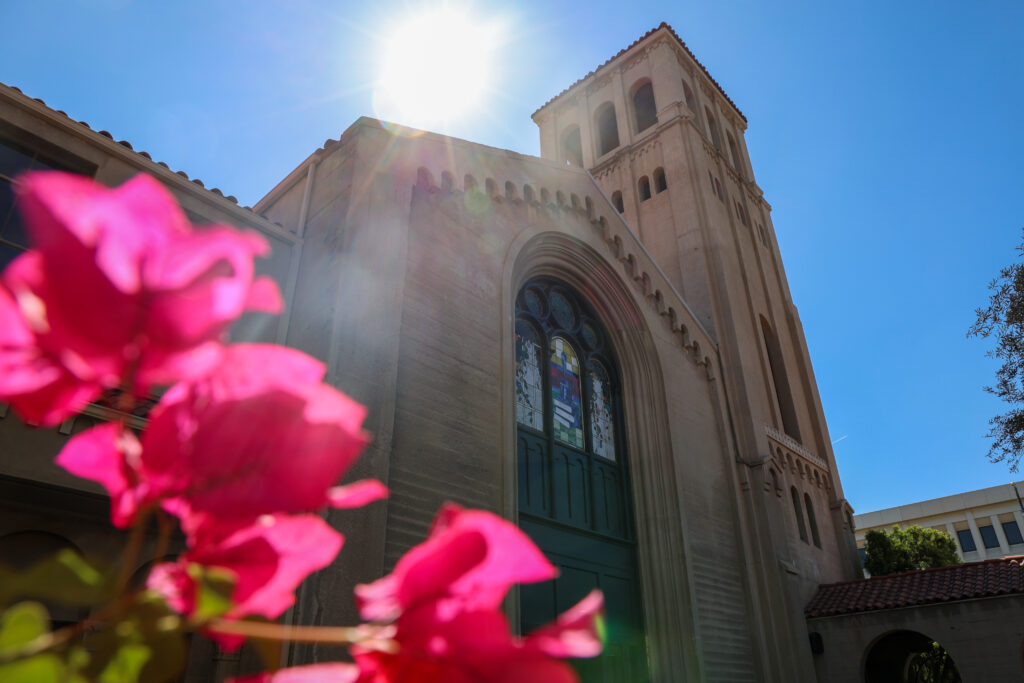
The structure reflects a distinctive blend of Romanesque Revival and Mission Revival architectural styles, visible in its large arches, thick concrete walls, tile roof, arcades, and prominent bell tower. It is widely regarded as one of the finest remaining examples of Romanesque Revival architecture in the southern San Joaquin Valley.
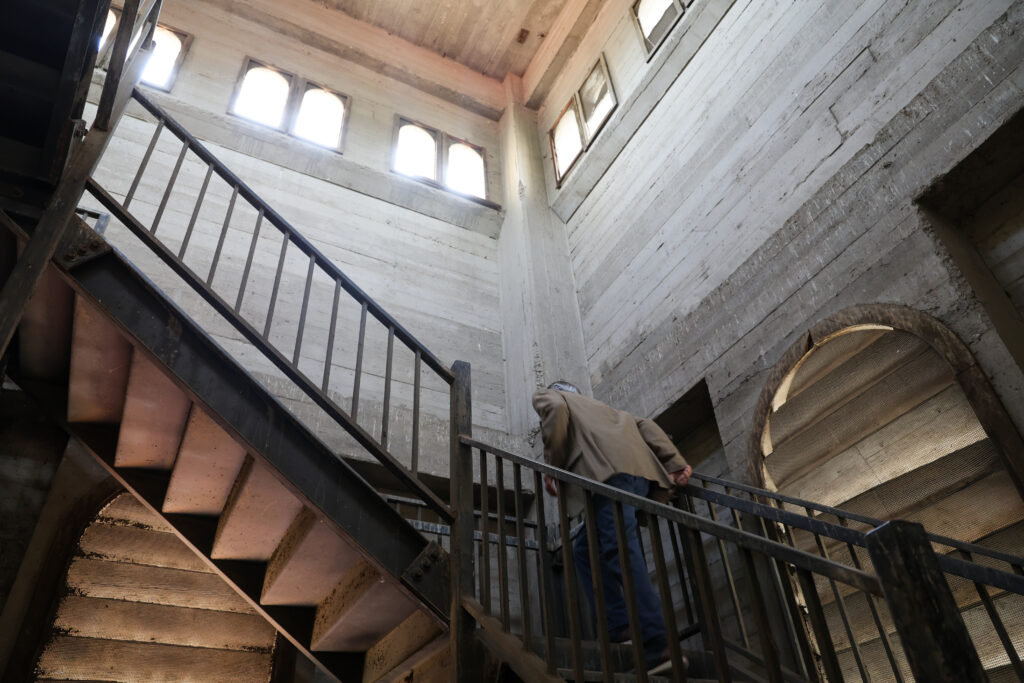
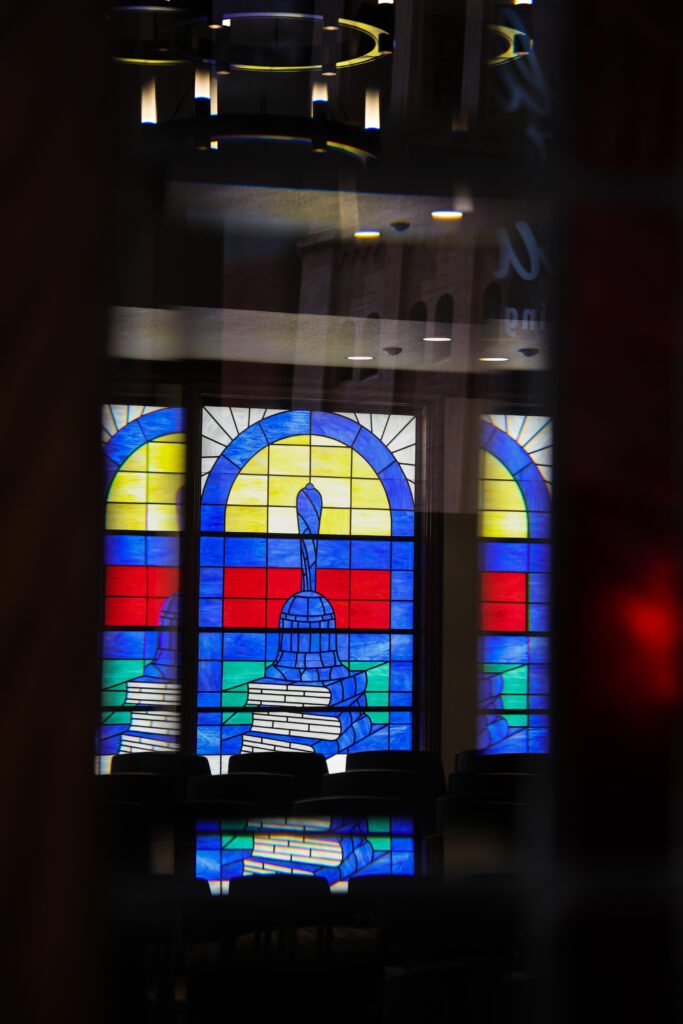
Listed on the National Register of Historic Places in 1979, the structure is highlighted by its 74-foot bell tower, large arched stained-glass windows, and dark wood trusses spanning the sanctuary ceiling. The building’s reinforced concrete construction, poured with a visible board-formed texture, reflects an innovative construction method used in California during the early 20th century.
Carson said the building is one of the few major structures from that era to survive fires, floods, and the devastating 1952 earthquakes.
Over the decades, interior spaces were adapted for a variety of uses, including offices, a bank, and restaurants, while the building’s architectural character remained intact. The facility also became a popular backdrop for wedding photos and community gatherings.
One of the most remarkable moments of the renovation came when Carson discovered the building’s original architectural drawings.
“When I opened it, I thought no way. Nobody’s this lucky,” Carson recalled.
The hand-drawn plans, dated August 30, 1931, provided a detailed window into the craftsmanship of the era. Every element, from window perspectives to roof framing, was drafted in pencil, even illustrating individual pieces of aggregate in the concrete and the grain of the wood framing.
Those drawings became a critical resource for the project, helping crews understand hidden structural systems and original design features. They revealed the ingenuity behind the building’s construction, including steel tie rods concealed within decorative beams, a system that helped make the structure extremely resilient.
The original building contains roughly 25,500 square feet of space. Only one modest addition has been made since its completion, a 3,300-square-foot choir room and pastor’s study added in 1956, designed by Whitney Biggar, the son of the original architect.
With a solid foundation to work from, the greatest challenge was modernizing the building’s infrastructure.
“Upgrading all the mechanical units and electrical systems, that’s the big part,” Carson said. “Structurally, we’re working with a big shell that’s in great shape.”
The modernization project included a remodel of restroom facilities, the addition of a hallway connecting the east and west wings, and the construction of new assembly areas on both the first and second floors. Interior spaces received new flooring, fresh paint, modern lighting, upgraded audiovisual technology, a state-of-the-art HVAC system, and flexible learning spaces designed to support both small team sessions and large regional gatherings.
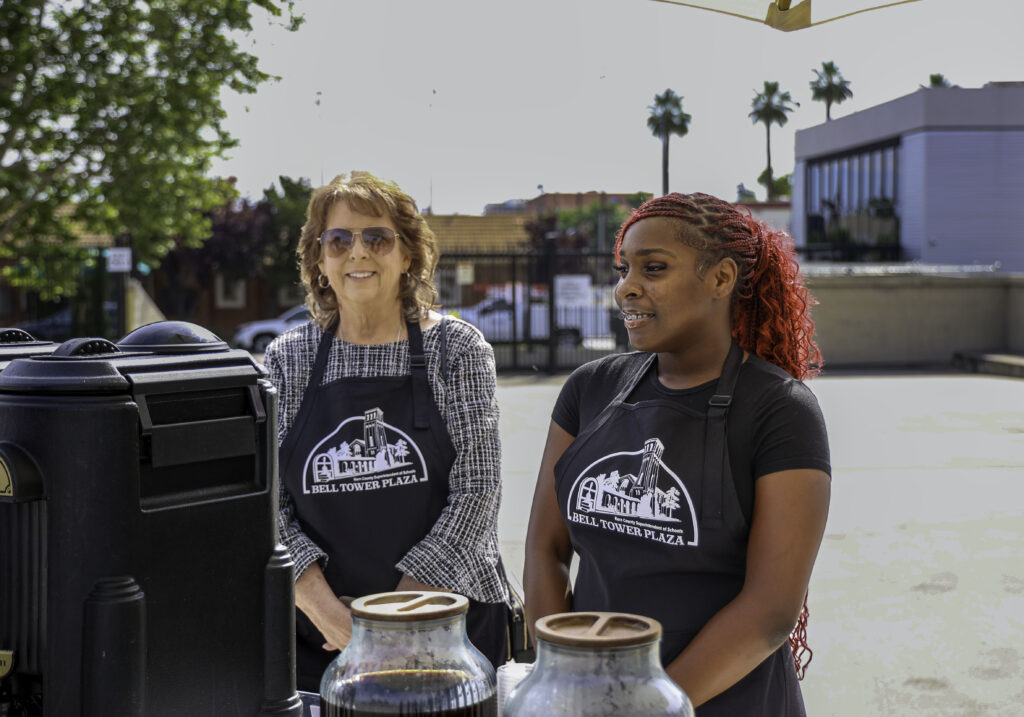
The building’s commercial kitchen was also completely renovated, allowing the space to support catering services while serving as a teaching kitchen for students in KCSOS’s Food and Nutrition Services CTE pathway.
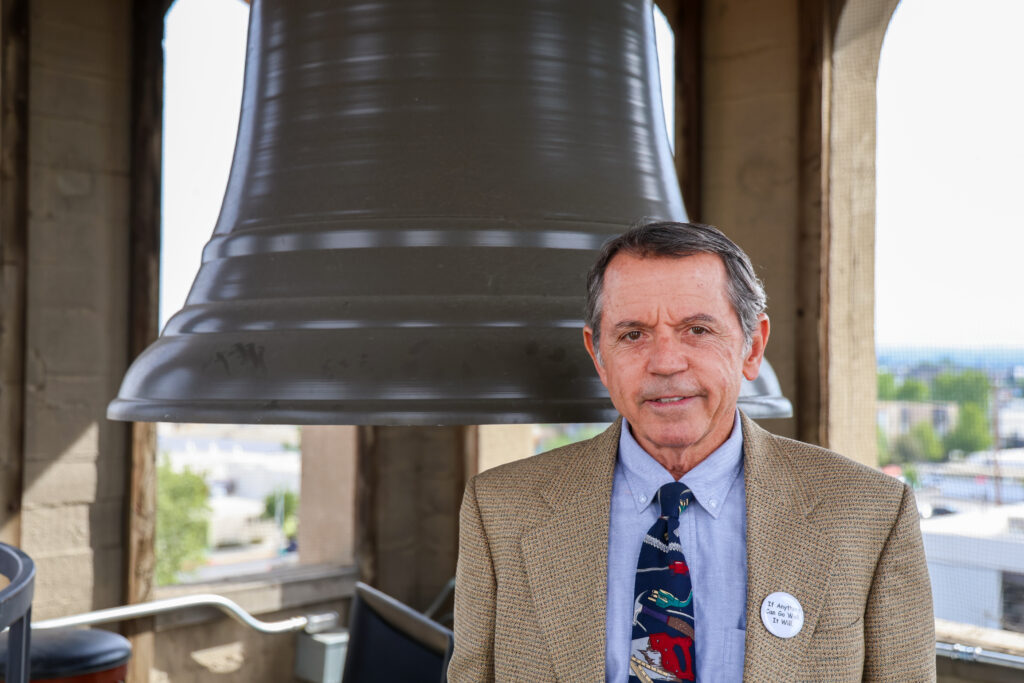
A functioning bell was returned to the iconic tower, restoring a piece of the Plaza’s heritage. Each breakout room has been named after past Kern County Superintendents of Schools, paying tribute to the leaders who have helped shape education in the region.
While the restoration honors the building’s history, the space is designed with the future of educator learning in mind.
“This is a place where innovation will happen and partnerships will be strengthened,” Mendiburu said. “When we invest in our educators, we invest in students.”
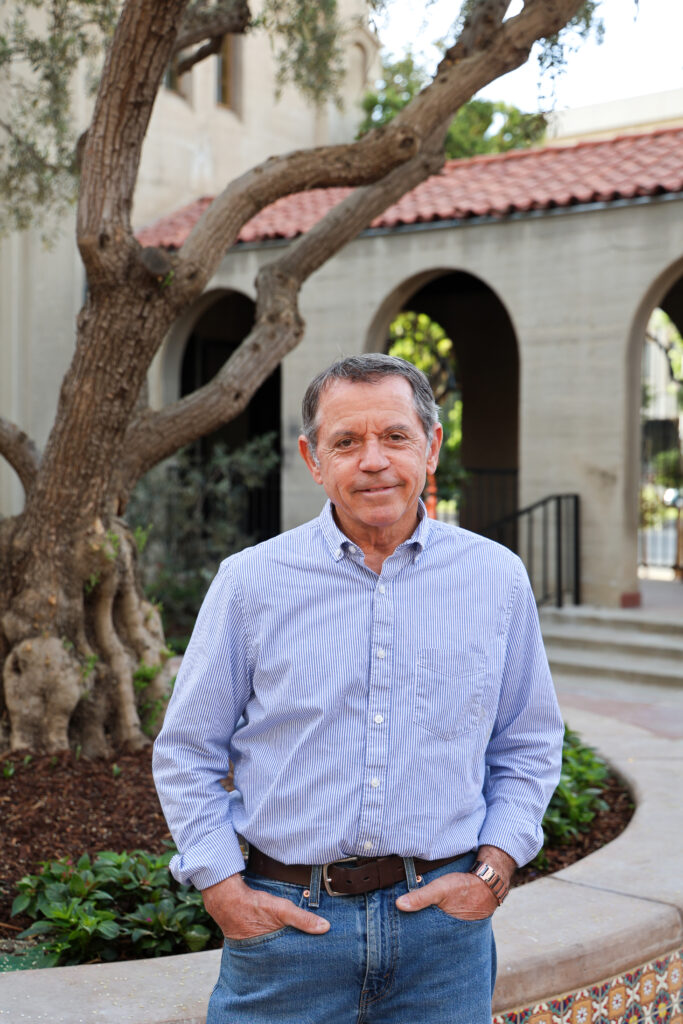

I’ve done a lot of school modernizations. But this one is unique. Who gets to do this? I feel really blessed.
— George Carson
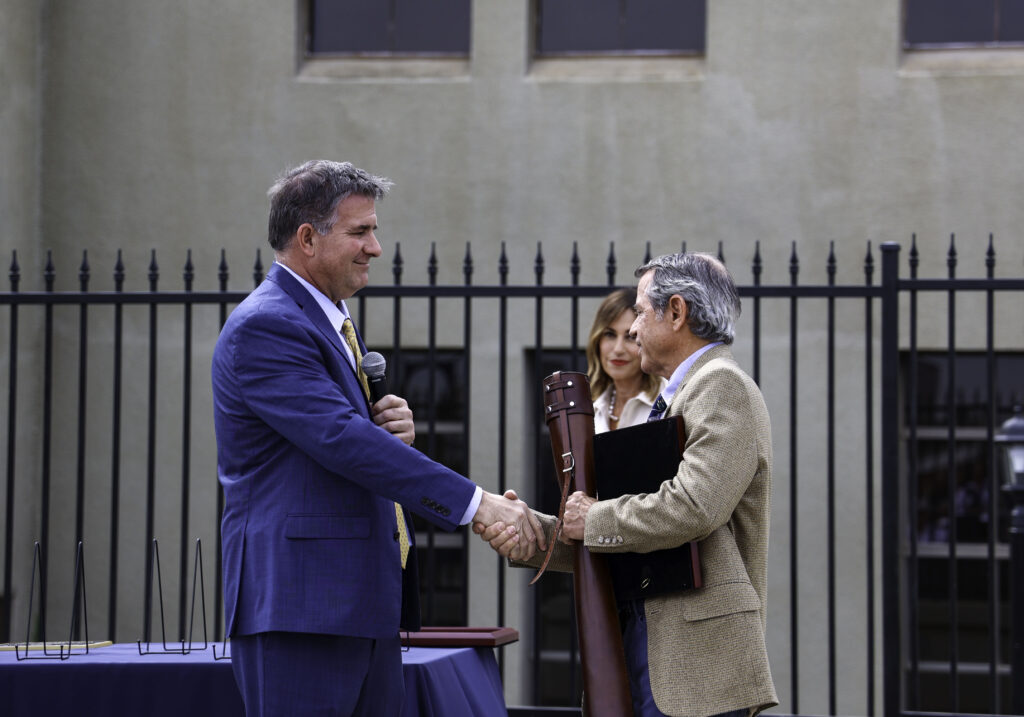
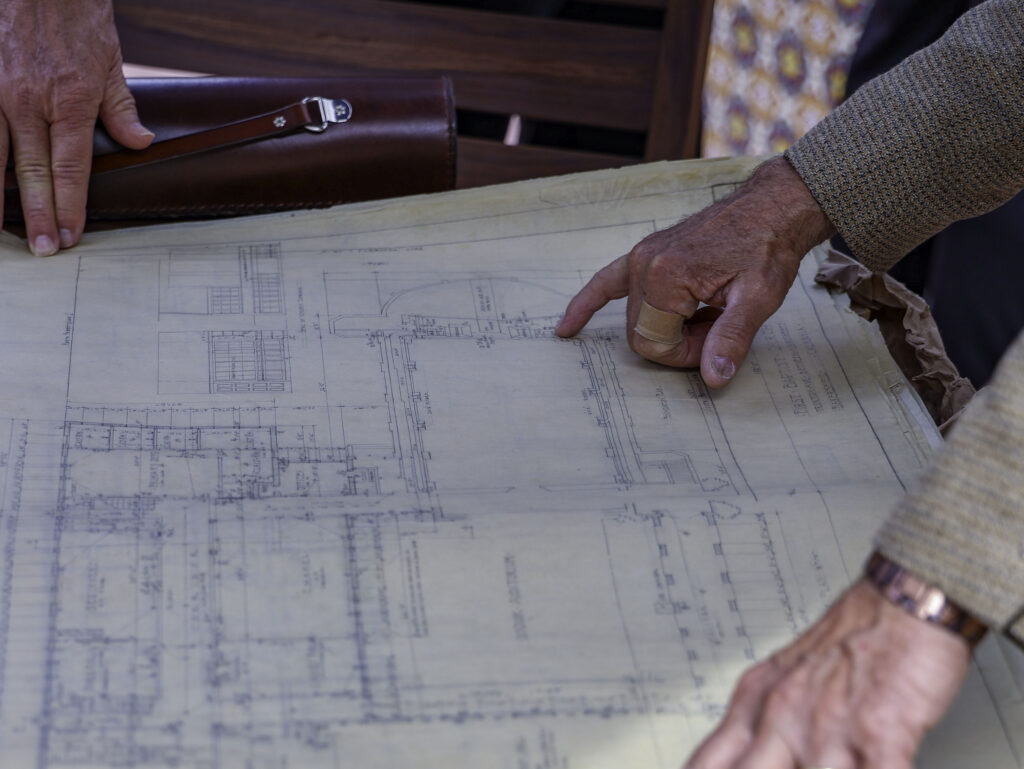
Dr. Mendiburu presented George Carson with the original Bell Tower drawings, preserved in a leather case, in recognition of his role in the project’s successful completion. He also announced that the Plaza’s courtyard will be named the George Carson Courtyard.
The Biglers Reflect on Fond Bell Tower Memories
As Bell Tower Plaza begins its next chapter, it carries with it decades of memories from community members who helped shape its story. Among them is one KCSOS employee whose connection to the historic building is deeply personal.
Russell Bigler, a former CEO of the Self-Insured Schools of California (SISC) and current KCSOS management consultant, fondly remembers the afternoon of June 6, 1964, the day he married Ann Gordon in the sanctuary of what was then First Baptist Church.
Their story began less than a year earlier. In August 1963, Russ and Ann met while teaching at El Tejon School in Lebec, introduced by then-superintendent Clay Orahood. By the end of that school year, they stood at the altar of the downtown church, joined by family, friends, including Orahood and his wife, Joan, among the guests.
For Ann, the connection to the church stretched back even further. Her grandparents were members when the church opened in the early 1930s, and her parents were married in the same sanctuary on Easter in 1937.
The building itself was once a hub of activity and community life. The Biglers recall a vibrant space filled with purpose.
“The social hall hosted dinners and wedding receptions, complete with a small stage and even basketball hoops at both ends,” Ann reclled.
There was a bride’s dressing room, an infant nursery, church offices and classrooms, and a small chapel used for dedications, weddings, and funeral viewings. There was even a pool at the front of the sanctuary where Ann and many others were baptized.
Over the years, the sanctuary welcomed hundreds of weddings and funerals, along with community events that left lasting impressions. Among them was the beloved “Singing Christmas Tree,” accompanied by the Bakersfield Symphony Orchestra.
As time passed, the building transitioned through new identities, serving as a restaurant and later housing law offices. The space beneath the balcony became a bar, and new floral-themed windows replaced the originals. Even then, the building remained a gathering place, hosting meetings and events for local residents and civic groups.
The family’s ties to the building continued across generations. Russ and Ann’s daughter and son-in-law, Susan and Scott Begin, later held their wedding reception there.
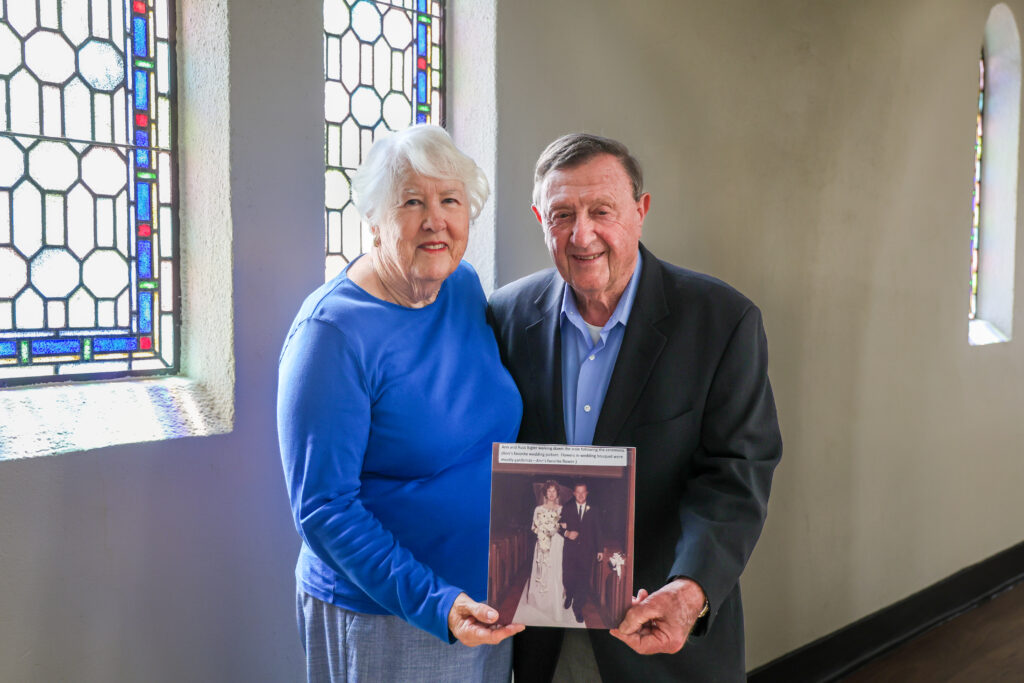
Ann and Russ Bigler stand inside Bell Tower Plaza holding their favorite wedding photo from 1964, taken as they walked down the aisle following their ceremony.
A Peek at a Historic Church Building Built to Last
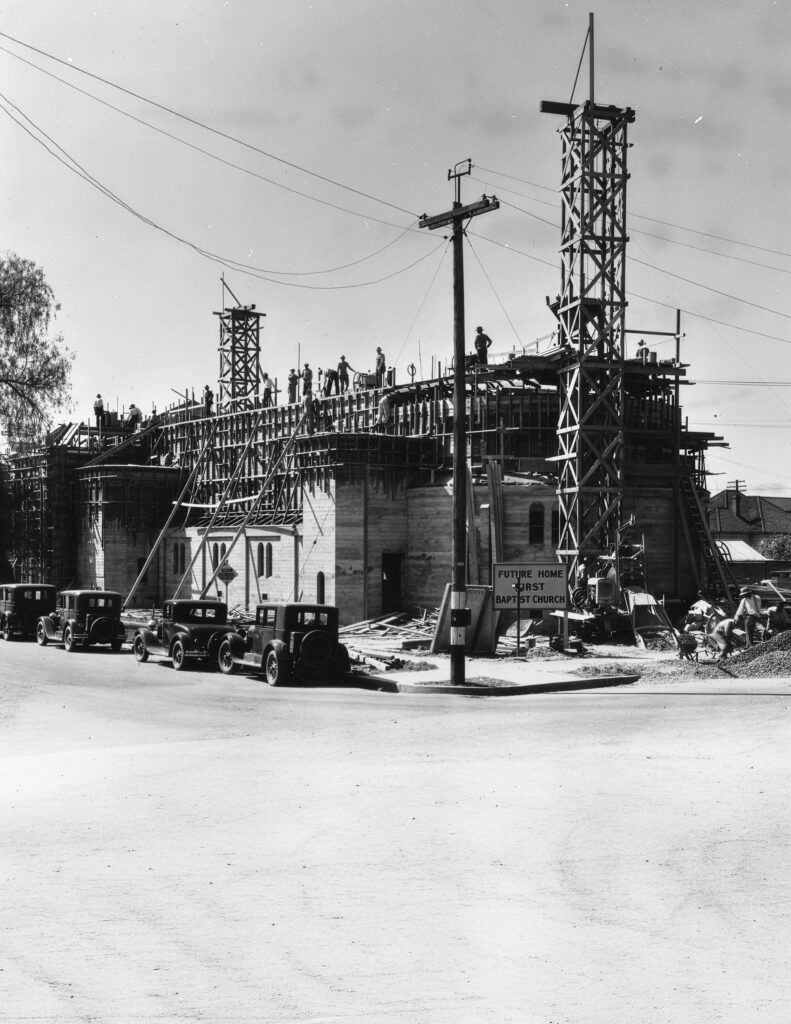
Nominated to the National Register of Historic Places in December 1978, the First Baptist Church was recognized for its architectural significance and enduring presence in downtown Bakersfield.
The excerpt that follows was taken from the official nomination form and offers a comprehensive, historically grounded description of the building’s design, materials, and spatial layout, as documented at the time of its designation.
he First Baptist Church nestles in all its splendor and regency in the very heart of the civic and financial center of downtown Bakersfield, California. Built of reinforced concrete with the board pattern of the forms left in place as a tactile surface of the finished concrete, the building reveals the sober massiveness and symmetry of the exterior. The entire building is painted in a solid warm earth tone and capped with a handsome red tile roof.
The bell tower, 70 feet tall, is in the center of the south facade and has become the landmark of identity to this outstanding church building. The tower base forms the south and west entrances leading to a vestibule, then to the narthex.
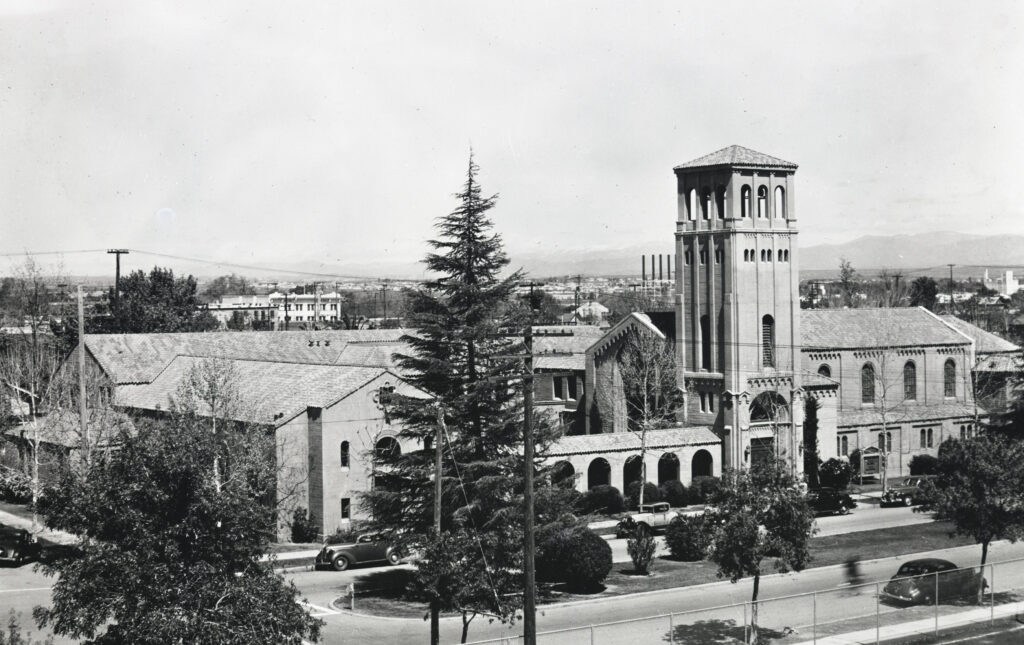
The large entrance doors, made of white oak, are richly carved and adorned with iron grilles and wood screen moldings. Entrance arches surround the doors in relief concrete forms with raised sculpture spirals adding to this handsome frame. The bold use of formed concrete rises majestically to the tower roof. Small blind arches in stages and smaller mullioned windows preserve the Romanesque character of the bell tower.
Among other delights of the south facade is the series of vaulted arches forming a tile roofed arcade, stylistically linking the Fellowship Hall to the west with the tower and sanctuary. Beyond this arcade is the open plaza adorned with greenery and a view of the high arched stained glass windows of the narthex.
The Fellowship Hall on the west corner is designed in Mission Revival style. The interior with its lofty ceilings of dark brown exposed trusses and rafters opens functionally to the outdoor plaza area through a series of double glassed doors.
To the east of the tower is the nave. Built in Romanesque style in the form of a Latin cross. The nave, long and stately, is divided along its length by a system of arches resting on sturdy piers which separate the nave and aisles.
To enable members to circulate with ease, the plan provides a beautiful system of continuous aisles. These bound the nave and extend to the transepts, crossing in front of the chancel.
The superb creamy white finish of the walls is offset by a 36-foot high ceiling elaborately adorned with a giant system of dark brown exposed wood trusses and rafters, handsomely carved.
Hanging from the beams that span the nave are heavy chain wrought iron circle candle light fixtures designed and imported from Italy.
High on the north and south walls above the arches are the magnificent stained glass windows designed especially for this building by the eminent artist J. L. Judson of the Judson Studio in Pasadena, California.
Each carries a unique and significant sequence of Bible history from Moses to the Apostle Paul.
The nave is joined to the east by the raised chancel and Gothic choir. The high half dome rounded ceiling is divided by majestic exposed wood beams with small stained glass windows for wall relief.
Twin transepts to the north and south adjoin the raised chancel.
Such proportions of the nave and the elegance of the chancel and choir beyond give the interior a lightness and gaiety which is heightened to the west by massive arched stained glass windows rising from the narthex at grade to the ceiling some 36 feet above and which forms the backdrop for the west balcony of the nave.
Beyond the narthex a system of wide and spacious corridors connect the small chapel with its arched walls done in relief, the ladies’ parlor with its warm decor and pleasant fireplace, the children’s library, conference rooms, choir room, administrative offices and pastor’s study.
The second floor over the above areas and on the north side of the building overlooking the open plaza are found a series of additional junior and intermediate classrooms for Bible study.
Except for one small addition the church has not been altered since its completion, testimony to its excellence of design and methods of construction.
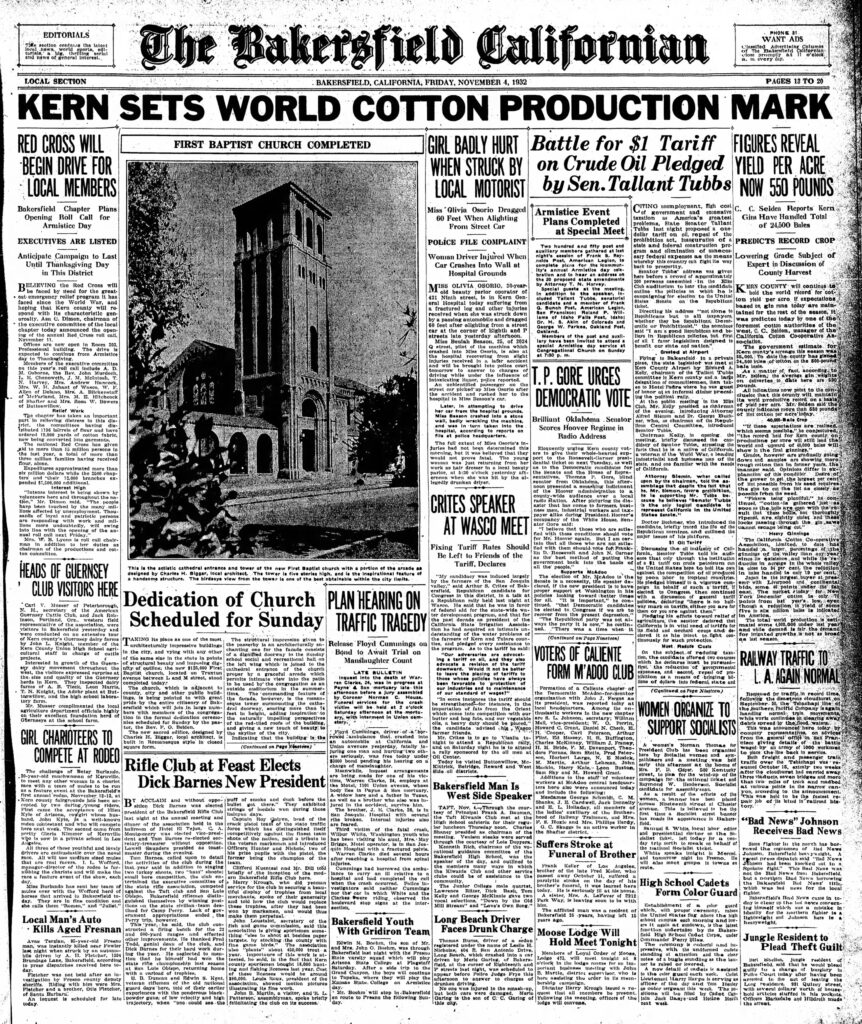
A look at the front page of The Bakersfield Californian dated Friday, Nov. 4, 1932. The publication featured a story about the Dedication of the First Baptist Church scheduled for Sunday, Nov. 6, 1932.
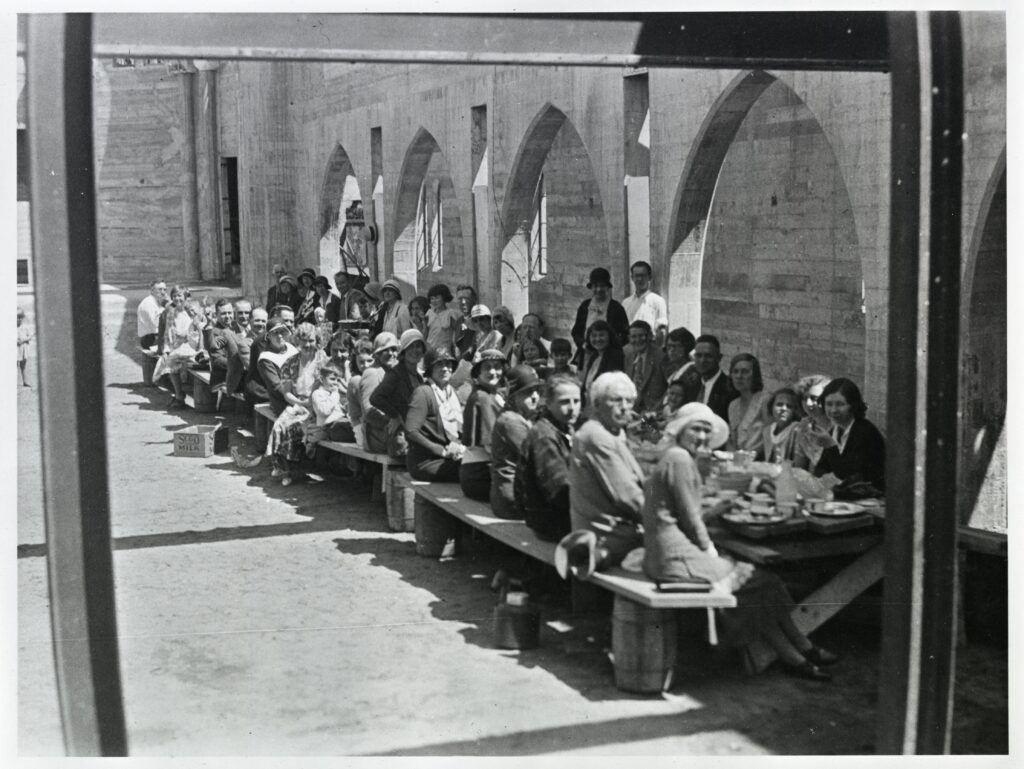
Congregation members regularly gathered for shared meals at the construction site of First Baptist Church.
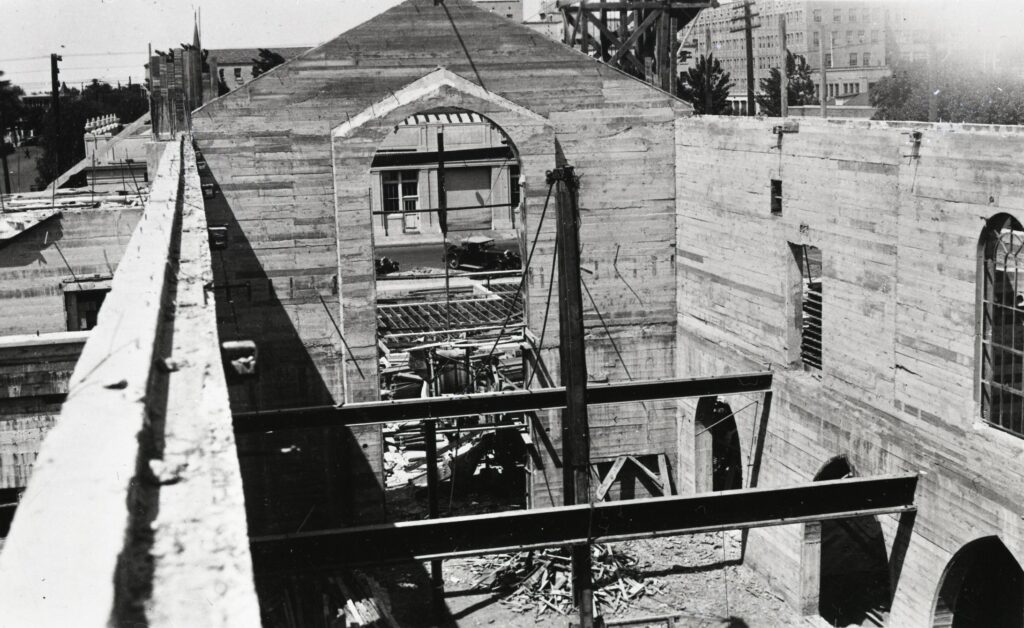
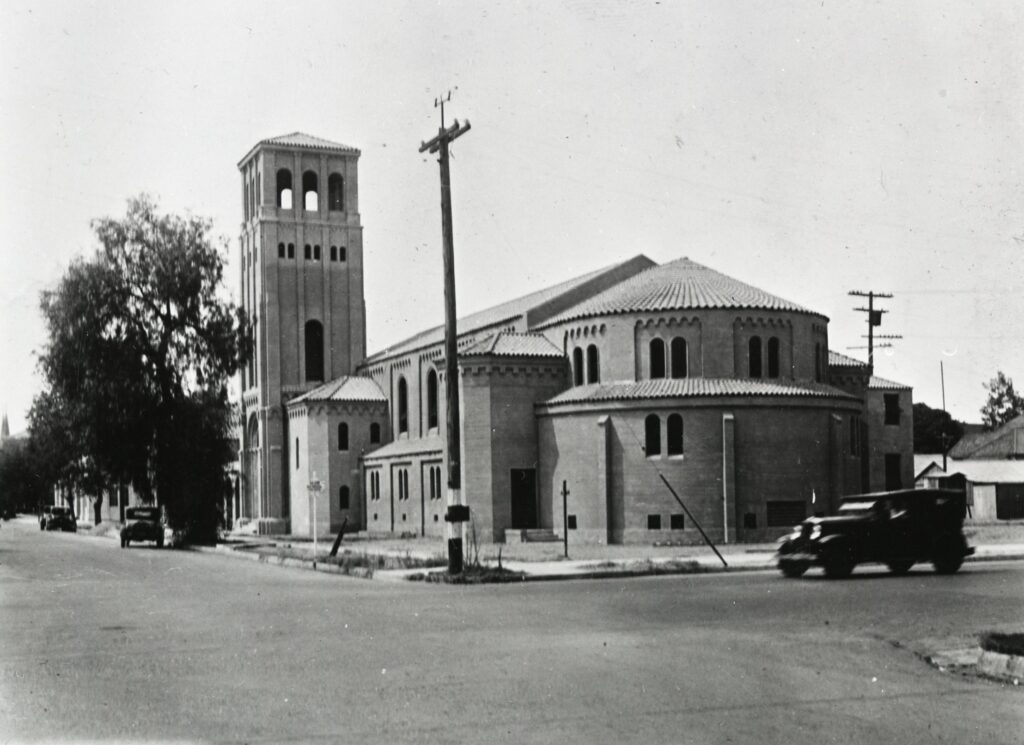
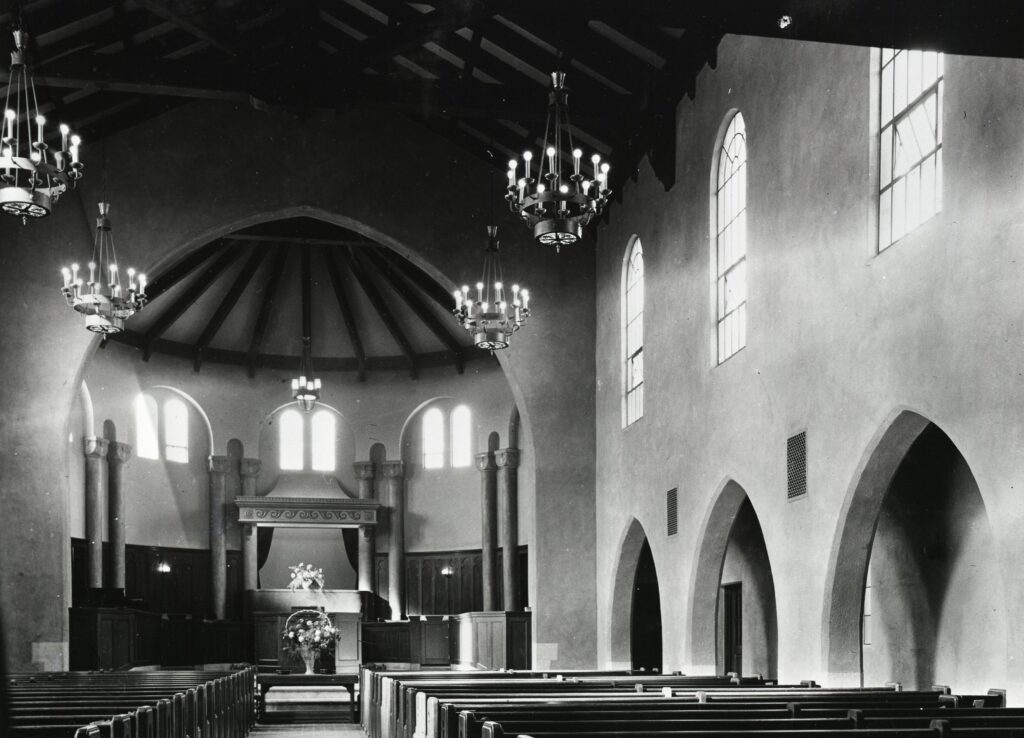
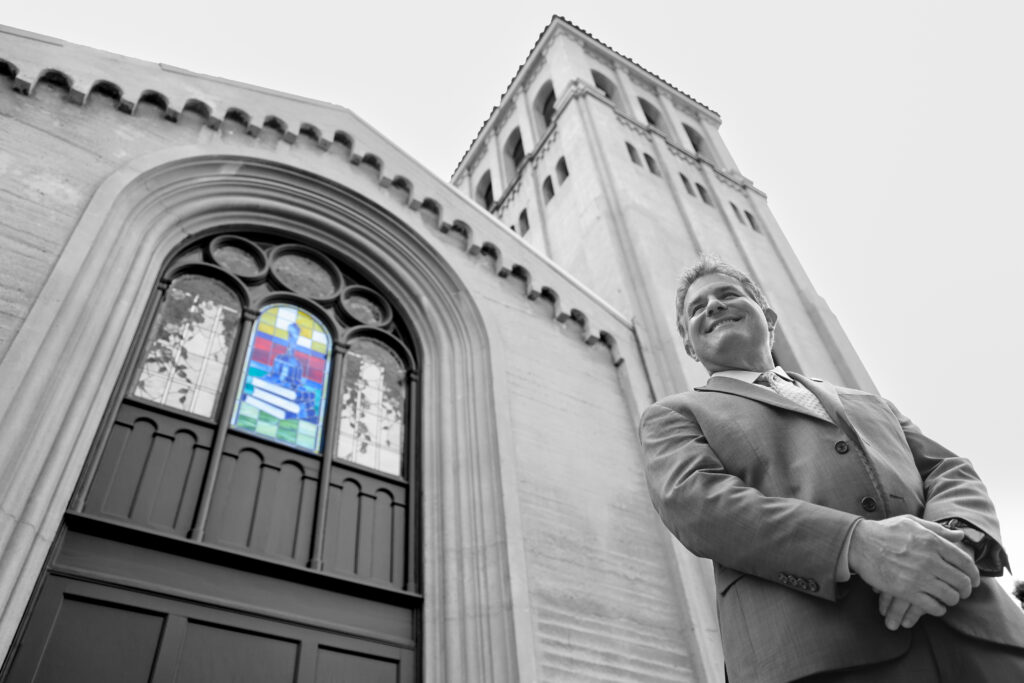
PHOTO GALLERY


By Robert Meszaros
Rob Meszaros is Director of Communications for the Kern County Superintendent of Schools, where he has served since 2012. In his role, Meszaros oversees media relations, internal and external communication strategies, publications, Marcom, branding, and multi-media content creation. Before joining KCSOS, Meszaros was the PIO for CSU Bakersfield and earlier worked for seven years at The Bakersfield Californian.