
Fruitvale Schools Honored for Positive Approach to Student Behavior
Monday August 31, 2026

For some students at Endeavour Elementary, taking a break might mean sitting quietly in a calming corner. At Quailwood, it might mean baking cookies in the teacher’s lounge. The strategies look different, but they are rooted in the same idea across Fruitvale School District — students thrive when they feel supported.
Fruitvale schools use Positive Behavioral Interventions and Supports (PBIS), an evidence-based framework that teaches clear expectations, reinforces positive behavior and uses data to guide increasingly targeted interventions. Support begins in the classroom, with additional help from teachers and counselors at tier two and more specialized interventions at tier three.
The approach is producing results.
This year, all Fruitvale schools received PBIS recognition for improvements in student behavior during the last academic year. Endeavour Elementary earned Platinum, the highest level, while Columbia Elementary and Discovery Elementary earned Gold, and Quailwood Elementary and Fruitvale Junior High received Silver.
“This is a really big accomplishment,” said district superintendent Leslie Garrison.
PBIS works alongside a Multi-Tiered System of Supports (MTSS), allowing schools to tailor interventions to individual needs. Campus values teach students to be respectful, responsible, kind and safe, while educators focus on teaching and modeling those behaviors rather than simply reacting with punishment.
“We’re focused on positive behavior, but there are still consequences,” said Endeavour principal Dr. Garnett. “We just don’t stop at the response to the consequences, we address what the need is.”
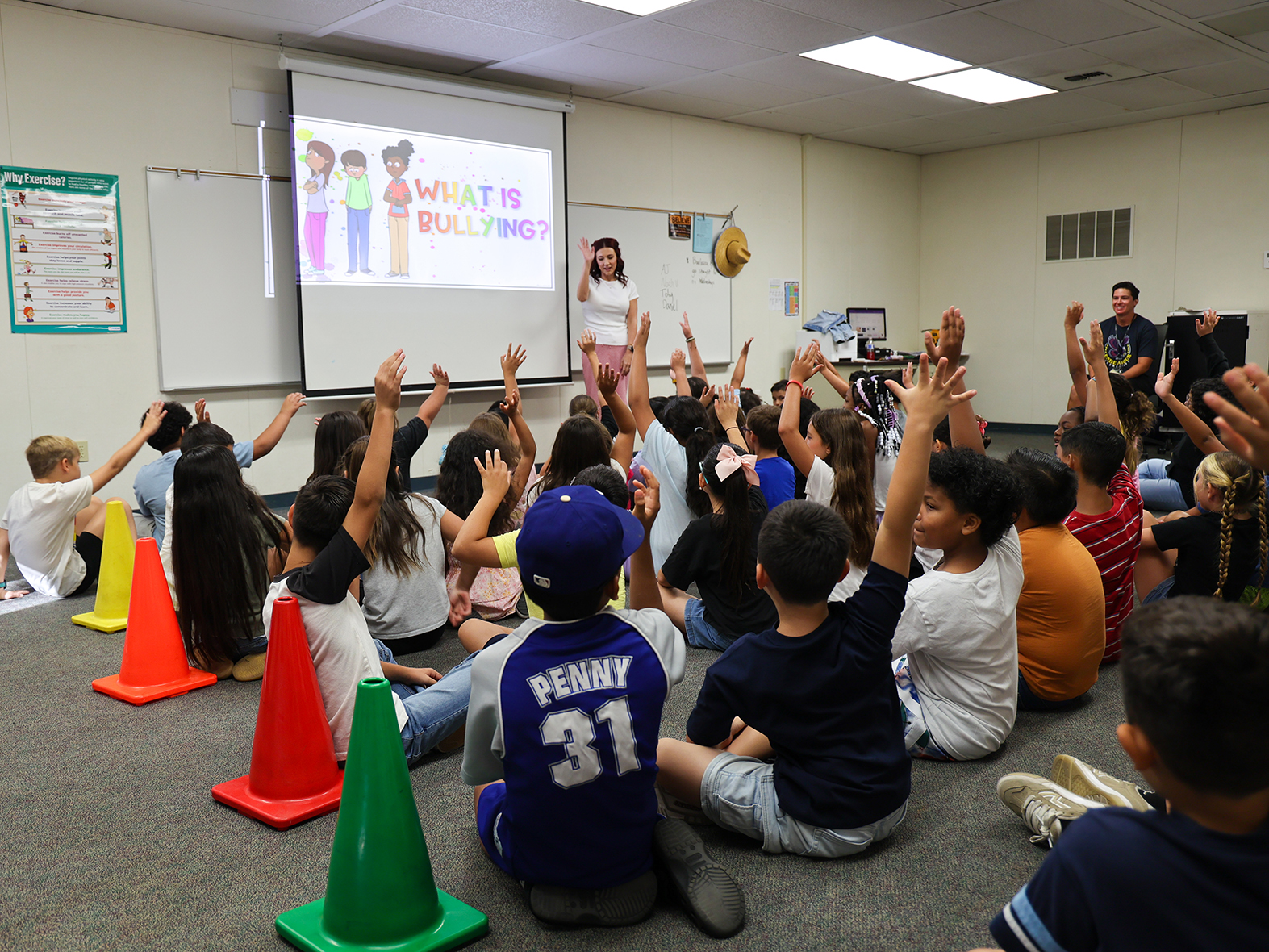
Schools track and review behavior data during MTSS meetings, including positive and negative recognitions. Strategies can be tangible, such as giving students points they can spend at the student store, or as simple as a teacher pointing to a note taped to a student’s desk reminding them to redirect their attention to class. Other strategies include class presentations from the school counselor on topics like bullying.
One district-wide strategy is “Check-in Check-out,” which requires staff members to give students written feedback throughout the day. Students earn points when they demonstrate one of the school’s values and can redeem them for fun activities.
The approach reflects a change in how schools view behavior, while also recognizing that trauma and family circumstances can affect a student’s ability to regulate emotions and learn.
Student support can include mentoring, counseling, social-emotional services, mental health breaks, and individualized interventions. For example, staff discovered that one student who was not responding to teachers or counselors was willing to learn good behavior strategies while picking up trash around campus with the custodian. Another student’s behavior improved when staff introduced a strategy that allowed the child to spend time in the teacher’s lounge baking cookies, a favorite activity at home.
As students become more comfortable and their behavior improves, relationships between students and staff can change. Dr. Garnett explained that staff have embraced the support systems because they see both accountability for student behavior and the positive impact those interventions are making.
Carlos Cardenas, psychologist at Endeavour, sees the positive impact the new approach has on students at the end of every school year.
“I don’t think we had this growing up,” Cardenas said, reflecting on his own school experience. “No, it was more authoritarian.”
The approach shifts from assuming something is wrong with a student to considering outside factors, such as divorce or other challenges at home. That understanding helps school staff respond to behavior more thoughtfully and avoid turning situations into power struggles.
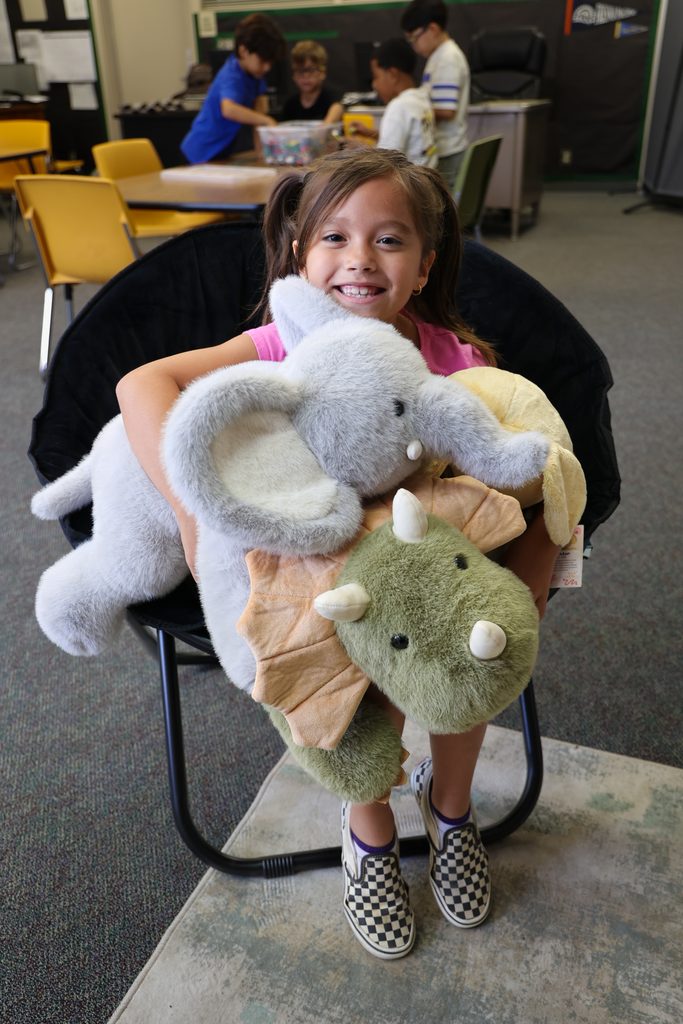
Classrooms are equipped with “calming corners,” featuring plush chairs for students to sit in and regulate their behavior before returning to their desk. Here, a student chose to sit in the calming corner during her lunch recess.
At Quailwood Elementary, first-grade teacher and MTSS team member Lauren Antongiovanni said the school is replacing negative directives with language that tells students what they should do.
“We’re eliminating ‘No’ and ‘Don’t,’ and just saying what we want the action to be,” she said. “So instead of saying ‘Don’t run,’ we say ‘Walk.’”
Educators acknowledge that what works for one student may not work for another, and schools have learned to look beyond a single disciplinary response to understand what each student needs. As a result, Fruitvale schools have seen fewer discipline referrals, more positive behavior and fewer students needing the highest level of behavioral support.
The greatest impact can be harder to measure: a child learning to ask for help, a student becoming a mentor or a former student recognizing how behavioral support helped them succeed. Those moments reflect the larger goal — helping students build the skills to understand and manage their behavior rather than be defined by it.
The district will be honored during the annual California PBIS Conference, Oct. 7–9 in Sacramento.

By Natalie Hernandez
Natalie Hernandez joined the Kern County Superintendent of Schools as a Communications Specialist in 2026. She previously worked in Bay Area public relations, supporting education, government, health care, and nonprofit organizations. Hernandez is passionate about using storytelling to inform and engage the public.