
McFarland High School Leads California’s Early College Initiative
Thursday October 29, 2026
McFarland High School senior Isaac Hernandez has taken welding classes every year of high school. He is passionate about the trade and proud of the opportunities his school provides.

“I’m really grateful for everything out here,” Hernandez said, motioning to the state-of-the-art metal shop. “We have about 15 to 20 machines. Each one of us can use a machine.”
He is also on track to graduate with an associate’s degree in Spanish and is interested in studying psychology and becoming a nurse.
“If I need money on the side,” he said, thinking about his future, “I’m a really good welder.”
Hernandez is one of many McFarland students taking advantage of Early College, a partnership between McFarland High School and the Kern Community College District that gives students the opportunity to earn college credits, certificates, or an associate’s degree while completing high school.
Kryssia Gomez is taking Spanish B3, which counts toward both her high school and college coursework. She can also choose to take a Spanish AP exam at the end of the year, combining dual enrollment with Advanced Placement opportunities.
“We’ll graduate with not only college credits but also AP classes on our transcript,” Gomez said. “So we get even more of a GPA boost.”
At McFarland, GPAs can reach 5.0.
Pathways include Spanish, leading to an Associate Degree for Transfer; Public Health and Business certificate programs; and Welding and Media pathways offering 12 college units.
“I had the opportunity in May to see all the students here at McFarland graduating, receiving some type of dual enrollment certification, whether it be units, full degree, beyond — it was amazing,” said Kern County Superintendent of Schools Dr. John Mendiburu. “Seeing the students light up, coming across the stage … they’ve gone on to better and bigger things.”
On Thursday, McFarland High School, now known as “The Hub” for Early College, hosted the official launch of the California Early College Demonstration Initiative, showcasing its approach to expanding college opportunities for high school students. The initiative aims to make college coursework a standard opportunity for students across California.
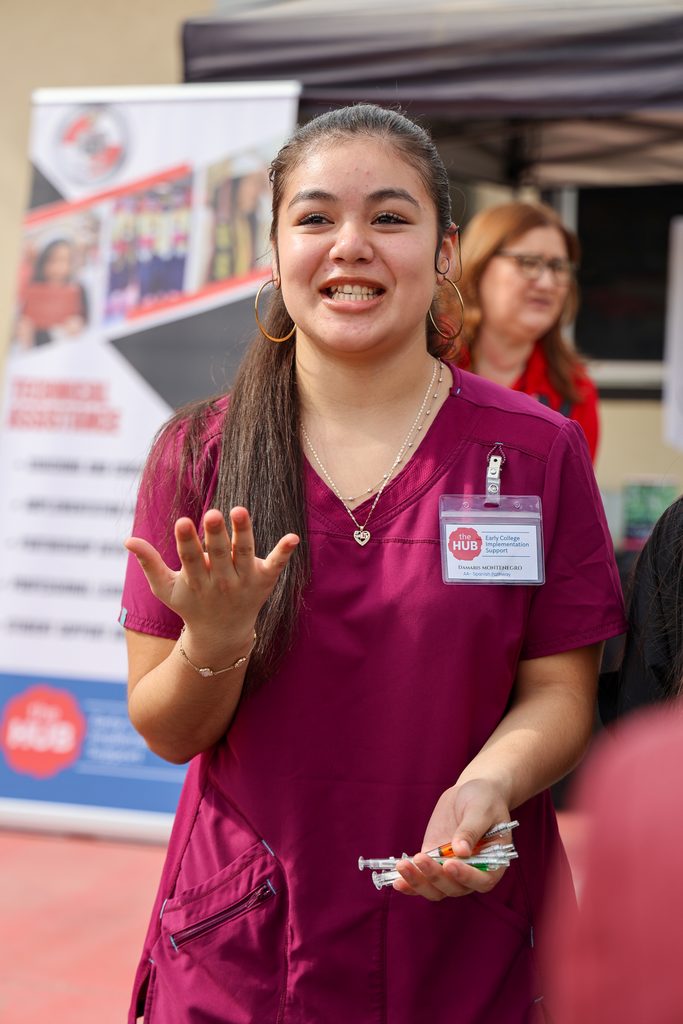

Students from the Public Health and Welding Pathways.
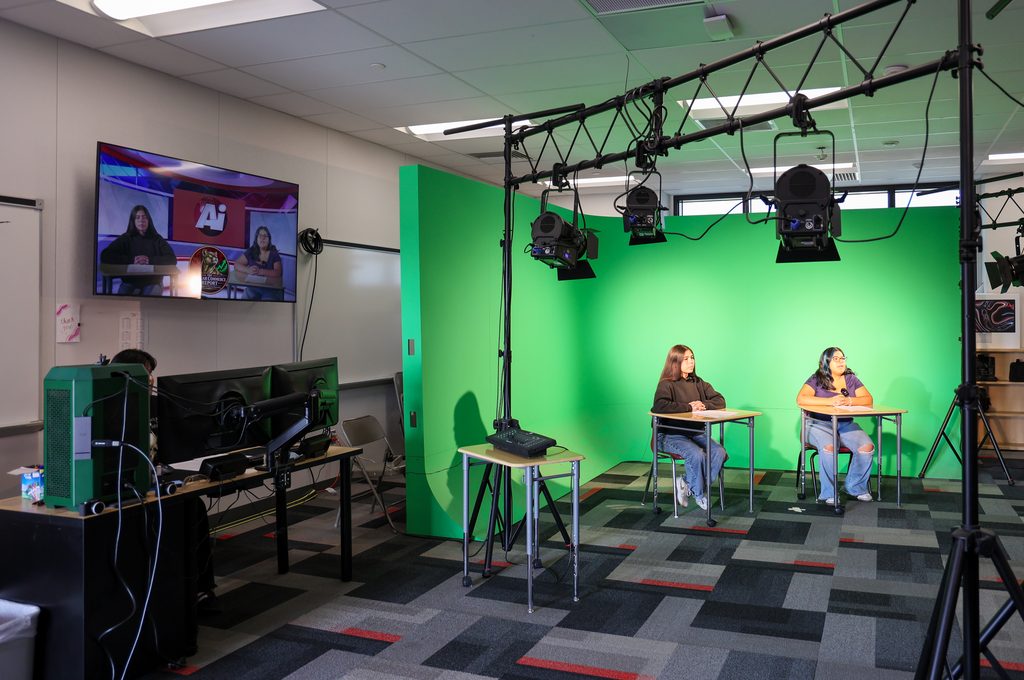


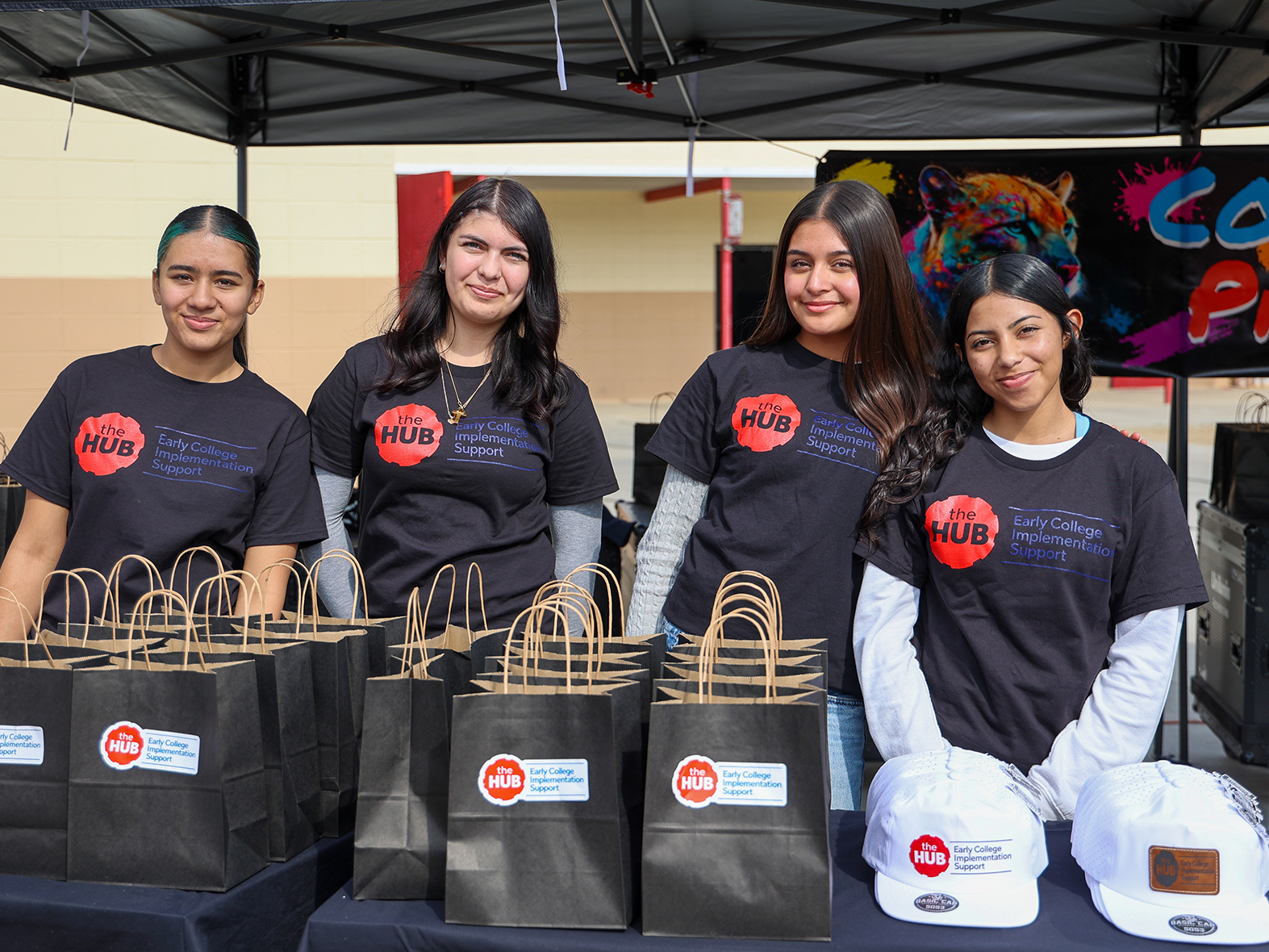
L: Students from the Business Administration Pathway created The Hub merch for the event. R: Business Administration Pathway students learn to type fast.
Backed by a $10 million state investment, the initiative helps high schools become “Early College High Schools,” where every student has the opportunity to earn at least 12 college credits toward a certificate or degree before graduating. The initiative is part of Vision 2030, a set of strategic goals adopted by the California Community Colleges Board of Governors in 2023.
Over three years, Early College aims to help 5,000 to 7,000 students earn college credit, save families more than $42 million in college costs, and lay the groundwork for expansion to 50 or more districts within the next decade.
“Modernizing education cannot simply mean putting more computers in classrooms,” said Senator Melissa Hurtado at the initiative launch. “It means rethinking how we prepare young people to reason, to innovate, to solve problems, and to understand the world around them. That’s what makes Early College so promising—it’s an opportunity to give students a stronger foundation before they even graduate high school.”
The state is also investing $2 million in financial aid application outreach and support services, including the California Student Aid Commission’s California Student Opportunity and Access Program (Cal-SOAP), to help students and families navigate college costs.
“Let’s not just say, ‘Here’s a slide that says do your FAFSA or CADA.’ Let’s actually do the FAFSA and CADA in the classroom,” said Catalina Cifuentes, Commission Chair of the California Student Aid Commission. “Let’s actually show those award letters in the classroom.”
FAFSA is the Free Application for Federal Student Aid that determines students’ eligibility for federal grants, work-study funds, and loans for college. CADA is the California Dream Act Application, a financial aid application that allows undocumented, AB 540-eligible, and Deferred Action for Childhood Arrivals (DACA)-status students to apply for state-based and institutional financial aid.
Kern Community College District is a statewide leader in dual enrollment, supported by Bakersfield College, which has California’s largest single-college Dual Enrollment program. Early College pilot districts include San Diego Unified, Corona-Norco Unified, Tehachapi Unified, and Wasco Union High School districts. Across California, nine demonstration projects are active, five are emerging, and eight have transitioned or been completed.
To support statewide expansion, the Kern County Superintendent of Schools office will provide practitioner support through the McFarland Early College Hub, sharing strategies, coaching, and real-world experience to help districts develop successful pathways. Kern Community College District will provide leadership, technical assistance, professional learning, and resources, including a statewide playbook to guide implementation.
As California works to expand access to college coursework, McFarland High School offers a model for what’s possible when students can begin earning college credit as early as ninth grade.

By Natalie Hernandez
Natalie Hernandez joined the Kern County Superintendent of Schools as a Communications Specialist in 2026. She previously worked in Bay Area public relations, supporting education, government, health care, and nonprofit organizations. Hernandez is passionate about using storytelling to inform and engage the public.